

Restoring a part of history
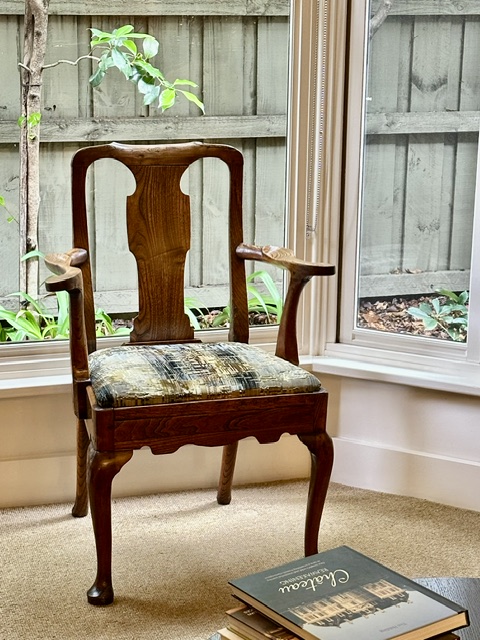
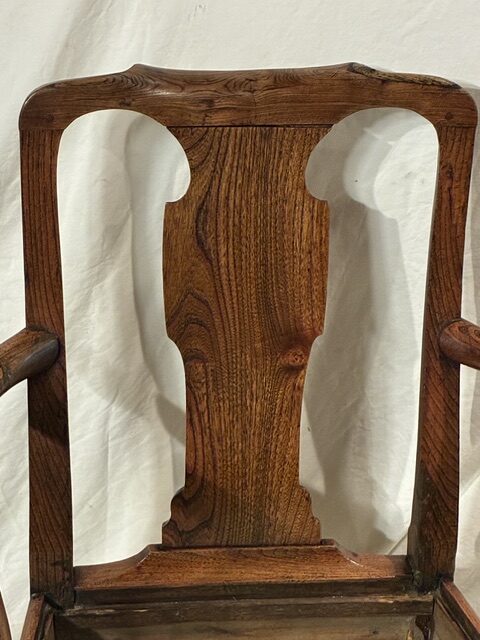
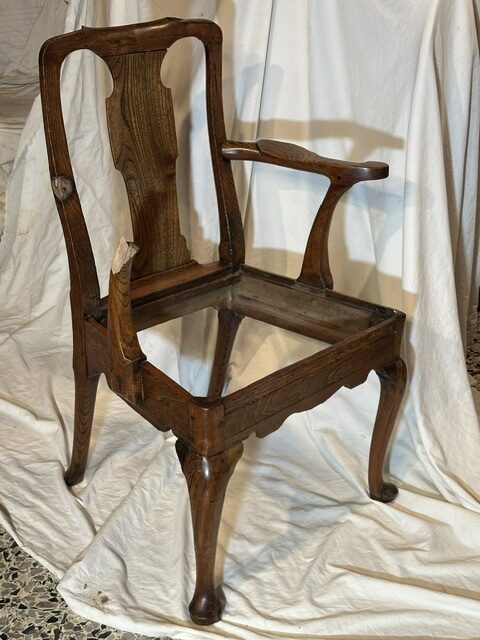
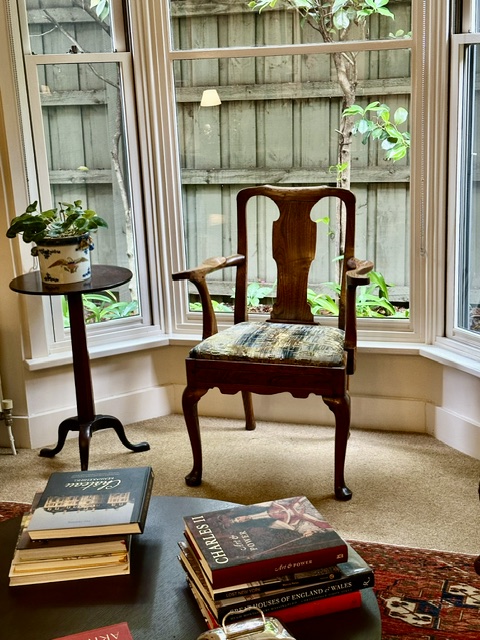
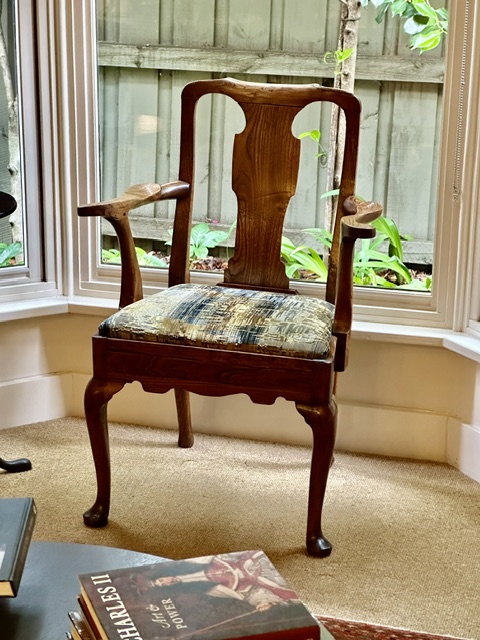
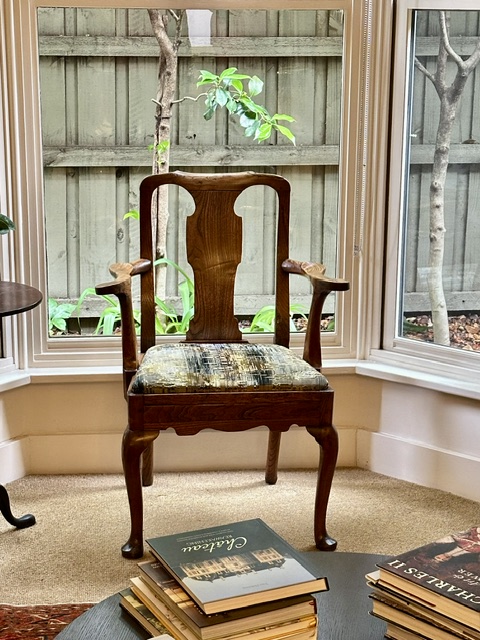
I delivered this beautiful George II English country elm and ash armchair to happy customers yesterday.
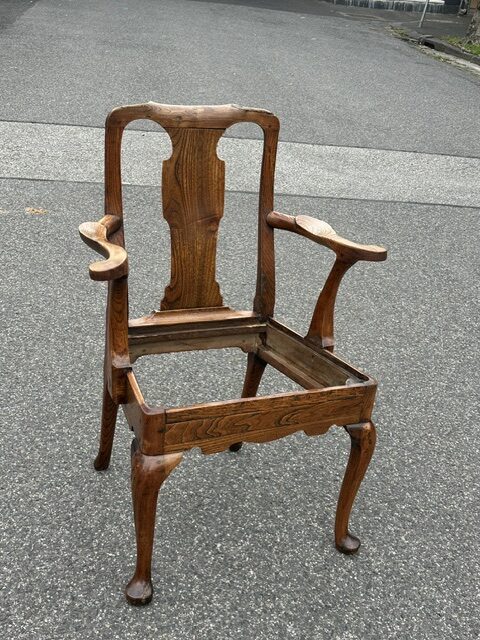
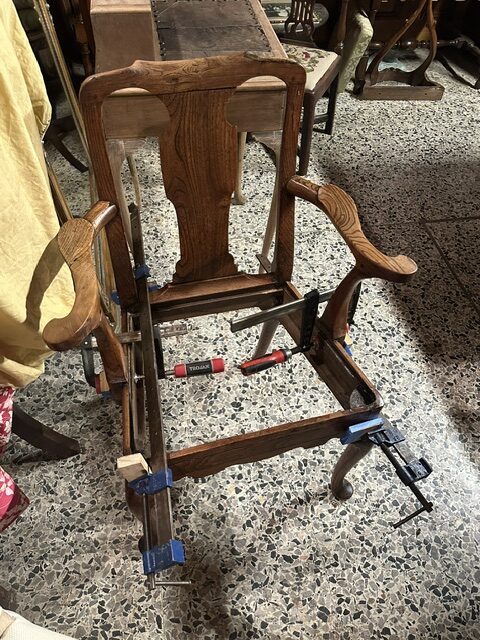
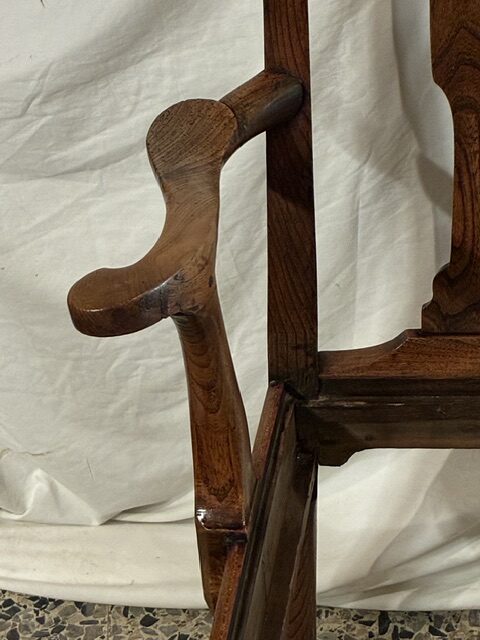
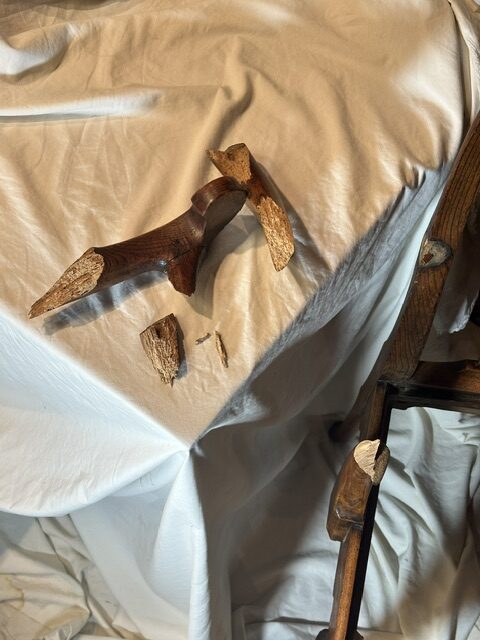
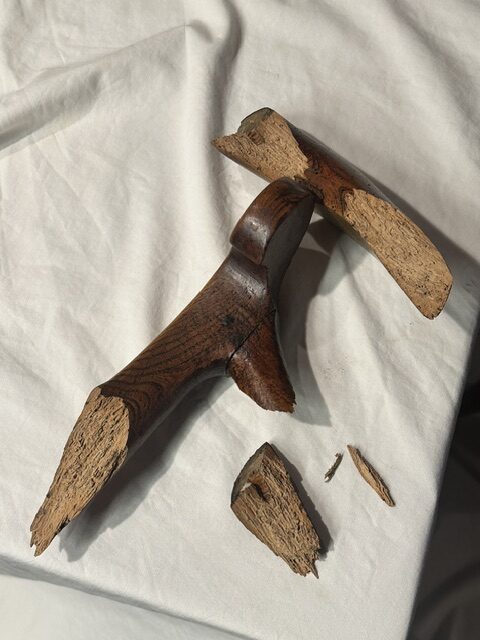
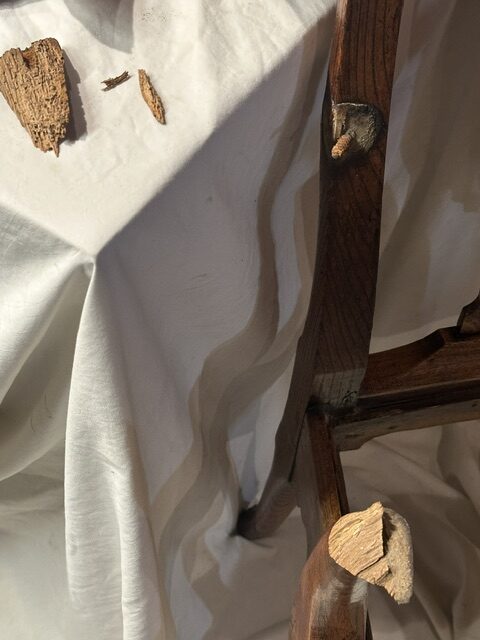
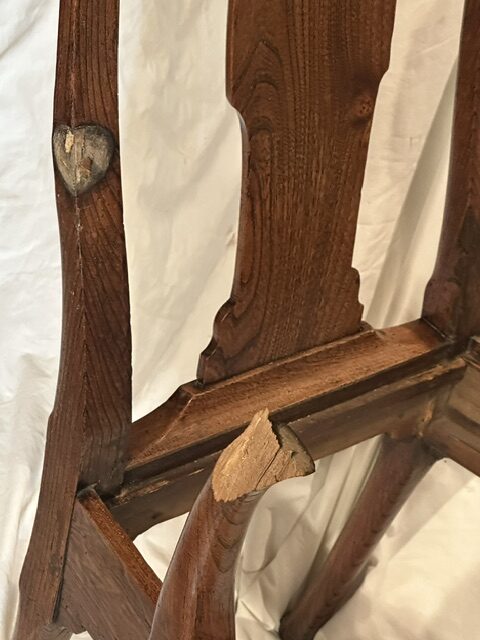
The chair was also very rickety, so Eddie took apart where necessary, removed long screws and hand made nails, restored and re glued.
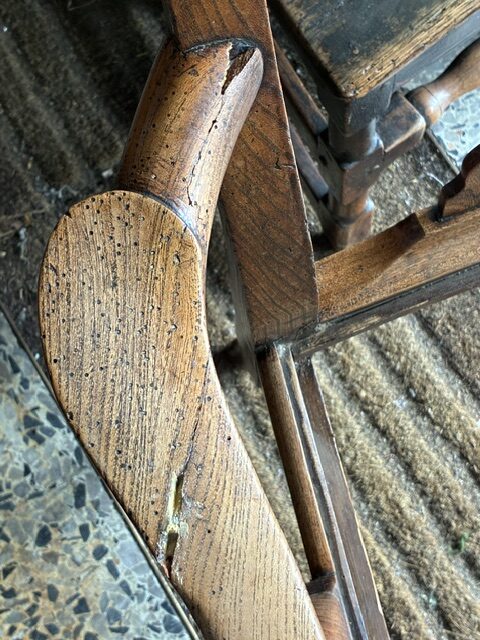
You can see from the oxidation where the arm meets the side support rail, the chair had been loose, maybe even longer than I’ve been alive. (That’s how you can tell if damages are fresh “as sometimes claimed” or happened long ago…
I then have the job of disguising any signs of the repairs, matching wax colours to the variations of the elm, wax filling, making polishes to do the finishing touches, slowly blending the polish with fine pencil brushes, then re-waxing overall.
I always love these jobs, as they’re not straight forward and you never know how many hidden screws and nails you’ll find, or modern glues used over the years, that don’t dissolve naturally like animal glue does, so simply with warm water.
Took me nearly an hour just to remove all of the animal glue runs and splashes, once Eddie had completed the repairs.
But it’s a pleasurable job, one could at times consider this work and loving the process as a form of gentle therapy… Well I certainly do
9.5 hours of work later and complete.
Delighted customers when I placed back to where had sat for many decades and as they said, with the fresh wax finish “He’s never looked better”
FYI, this incredibly stylish 18th century armchair, was made 1730-1760, long before Captain James Cook landed on our shores.
That’s something to ponder…
When a chair that’s approaching 300 years of age tells you something!
Knowing this style of chair, beginning in the Queen Anne period around 1702, seeing many over the years, I can see that this chair was most probably made by a French cabinet maker. The obvious reason being, the lower front rail, between the bold cabriole legs is very French in every part. So blatantly obvious and quite a statement. Where as, everything else about the chair is perfectly English.
Maybe I’ll do a story on our large tin of hand made nails we’ve pulled out of furniture ranging from 500 – 100 years old, of all shapes and sizes over the past four decades?