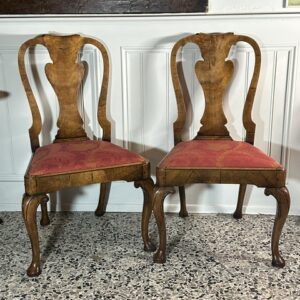
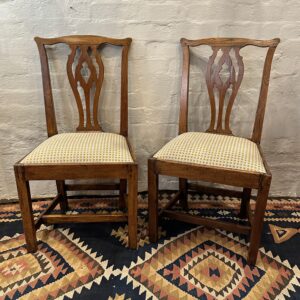
The moulded top rail,
with carved scrolled ears, above a vase-shaped center splat, flanked by serpentine shaped side supports.
The upholstered drop in seat, resting within narrow thumb moulded, book-matched rails, resting on well carved scrolled cabriole legs, with a round pad-foot.
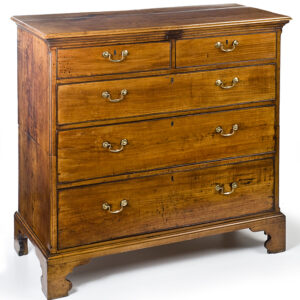
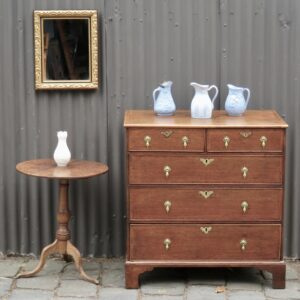
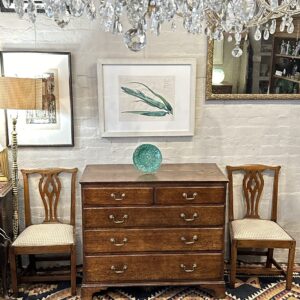
Late 18th Century English cherrywood and laburnum chest on chest.
The moulded three plank top above applied mouldings to the top rail with a shaped laburnum centre piece. Then two short and three long generous sized graduated drawers having unusual laburnum cock beading and brass swan-neck handles, flanked by chamfered and moulded corner uprights, resting on attractive shaped bracket feet.
Note: This is the first Georgian fruitwood chest I have had in over 20 years, also having beautiful fruitwood and beech drawer lining and good overall colour.
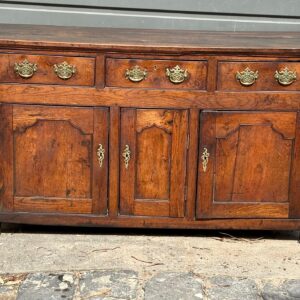
The well patinated three plank moulded top, above three drawers, retaining the original brass fret shaped handles.
Notice the cock-beaded inside edge mouldings, giving the illusion of being on the drawers (mostly done on country pieces) above one narrow central panelled door, flanked by two matching wider doors.
Having double panelled sides, resting on square block legs.
From usage over the past 150 years the finish has naturally worn off, leaving a beautifully faded raw patina.
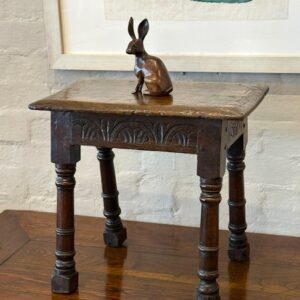
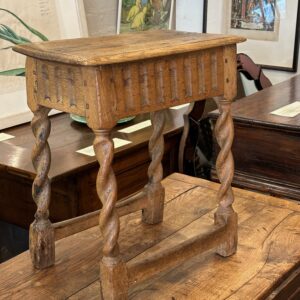
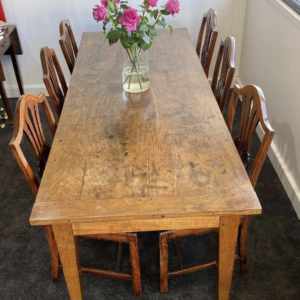
The rectangular single plank moulded seat having attractive figured oak grain.
Above deep upright gouge carved skirts, with a pretty fine scratch-carved flower over all.
Raised on beautifully carved fine lined Jacobean style barley-twist legs.
Joined by the two remaining long stretchers.
C.1870
I’m explaining this table in full detail, to show why I love English country oak, elm, chestnut, ash, fruitwoods, walnut and beech, as no two pieces really are quite the same.
(Unlike town pieces, especially 18th – 19th century mahogany’s, predictably perfect.)
Such an interesting table, with various periods included in the making.
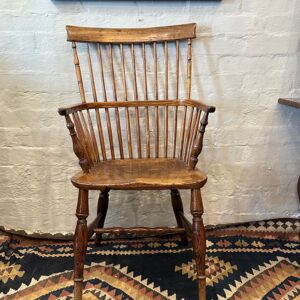
A customer brought in this exceptional copy of a mid 19th century English comb-back ash and elm Windsor armchair yesterday, such a good late 20th century copy, in every way.
I don’t sell copies, but remembered another customer was wanting an original, I called and showed her this one. SOLD!
Certainly priced accordingly, but two very happy customers.
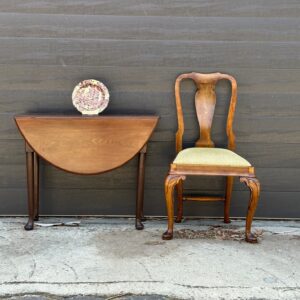
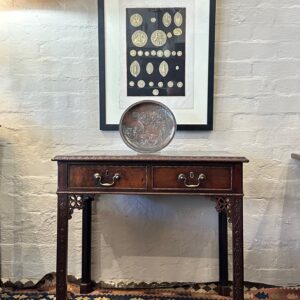
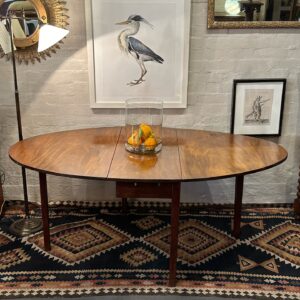
A rare George III English oak dish-top lamp table.
C.1770
H.69cm Dia.41.5cm
Hanging above, “Caunga”
Hand painted copper engraving,
by Hendrik Draakestein.
The first complete flora from the East Indies.
Amsterdam 1686
The well patinated two plank cleat-moulded top, above two short, then three long graduated narrow moulded drawers, having brass swan-neck handles.
Resting on classic shaped bracket feet.
Great overall faded patina.
C.1770
The ogee shaped top rail having slight ears, above a fret-carved central splat,
resting on square inner chamfered legs, joined by an “H” stretcher.
The well upholstered pure wool small check, drop in seat (hand tacked) by C.W.Howell Upholstery.
Over 35 years my upholsterer.
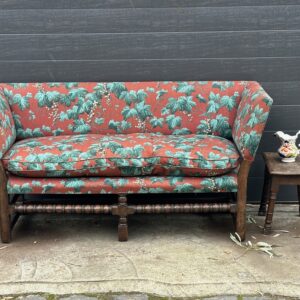
With grapevine upholstery and comfortable long down filled cushion.
Surprisingly comfortable.
I can see in a barristers or drs waiting room. Very smart indeed.
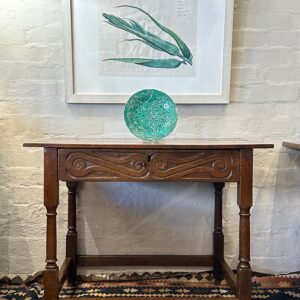
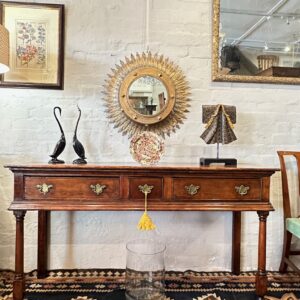
The well patinated two plank moulded top, above a small central cock-beaded drawer, flanked by two longer drawers, having later but appropriate 19th century solid backplate brass handles,
above an attractive shaped lower mould, resting on turned column front legs and plain rectangular rear legs.
1780 – 1820
H.85cm
W.160cm
D.45cm
I sold this low dresser over 30 years ago, via interior designer Barb Brownlow and re purchased from same customers.
Rarely does pine resemble oak so well.
Centuries of waxes and different polishes creates this patina.