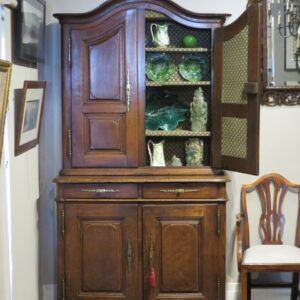
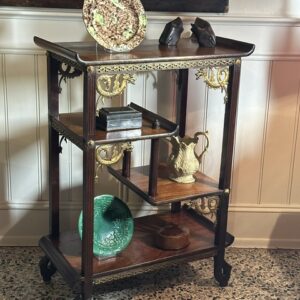
This is French with strong English Hepplewhite influences.
Over the years I’ve sold many, usually slight or profusely carved.
This example has elegant modern like lines, beautifully worn and patinated. All original brass-work.
The standout piece in a modern apartment living room, entrance or hallway. Stunning lines indeed.
Beside 18th century English country Hepplewhite dining chairs. Notice the influence in style.
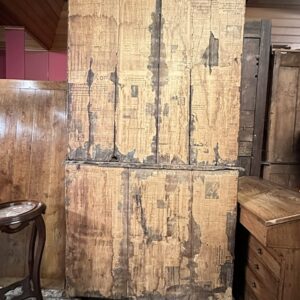
The 1940s Paris newspapers stuck to the backboards, adds yet another interesting touch to this rare 18th Century French Oak Buffet Deux Corps, of Small Proportions
This is French with strong English Hepplewhite influences.
Such an interesting piece.
As I said, usually carved, also usually much larger proportions.
H.230cm W.120cm D.50cm
Included on my Retirement SALE,
$16,500 reduced to $8,250
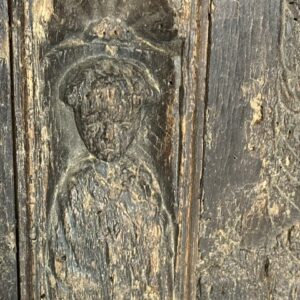
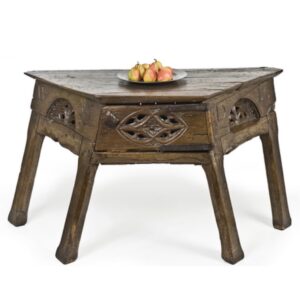
This is a classic composite, or “married,” construction of the kind long recognised in the trade: a later carcass carefully built to showcase much earlier salvaged fragments. The front facade consists of highly distinctive Tudor-period carved oak panels that capture the transitional phase between Late Gothic and Early Renaissance design in England.
The architectural arrangement of the facade is divided into vertical framed panels that derive directly from traditional medieval joinery. Arcaded structures contain primitive figures, characteristic of late medieval and Henry VIII-period carving, flanking a central panel of stylised, interwoven geometric motif. The three principal panels display a deeply incised geometric design, with trees or vines appearing on the side panels. Figures stand beneath carved archways in a manner strongly influenced by continental Renaissance designs that reached England and Flanders in the early sixteenth century, a style often described as “Romayne” or architectural caryatid carving.
These panels may originally have formed part of a fifteenth- or early sixteenth-century marriage chest (cassone), or been taken from Tudor oak wainscoting or dismantled bed heads in manor houses. Their surface shows severe age-related degradation, chipping and deep vertical checking on the lower sections, creating a heavily eroded, dry texture that contrasts markedly with the smoother structural frame surrounding them. Historic borer trails are present, as is typical of early oak. These are long extinct, with stable oxidisation and no evidence of active infestation.
The outer frame (stiles, rails and top lid) is a reconstruction of the Arts & Crafts period, when craftsmen held a particular reverence for medieval and Renaissance joinery and routinely salvaged original fragments from decaying estates to create new, functional pieces.
Two conservation options are under consideration: careful removal of the Tudor panels for independent conservation, sealing, wax finishing and reverse-framing on an antique velvet-covered timber panel (in the manner of the sixteenth-century Flemish oak panel of a rising angel previously offered), or retention of the complete composite structure with gentle restoration of the front panels and wax finishing of the surrounding coffer. Both approaches respect the historical integrity of these early carvings.
A rare and evocative survival of the transitional Tudor period, offered with complete transparency as a composite construction of genuine early panels within a later frame.
Panel
42 x 95cm
Coffer
H.66
W.120cm D.36cm
Call or text me for further details or to arrange a viewing.
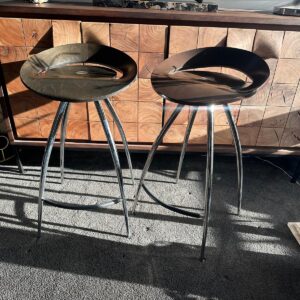
Designed for Design Group Italia in 1990 and manufactured by the Italian brand Magis.
This classic postmodern design features an organic, curved bentwood plywood seat shell combined with a futuristic, tapered three-legged tubular chrome steel base.
Because of their enduring popularity, they were also famously distributed globally by Herman Miller.
The stools are in great condition.
Selling for a friend $750 pair
Happy to deliver inner city No charge…
Otherwise, pick up St Kilda West or North Fitzroy.
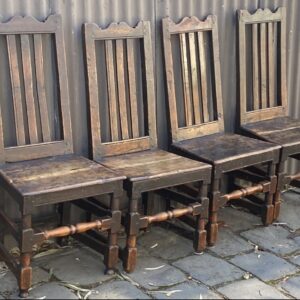
The ogee-shaped top rail above three plain rectangular scratch-moulded upright plats, supported by a lower rail, above two plank seats (some attractively knotted) resting on square block turned legs, terminating on a small pad-foot, with a high turned front stretcher, with double stretcher sides.
H.135cm W.46cm D.46cm
C.1700
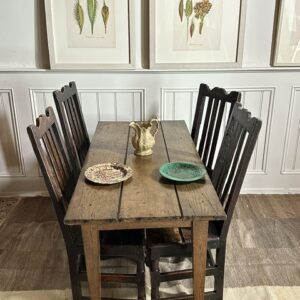
Perfect for a low farmhouse table, with narrow skirts, such as this one displayed. Or make some thick decoratively upholstered fitted cushions and use with a standard 76cm hightail farmhouse table, or use as two decorative pairs of side chairs.
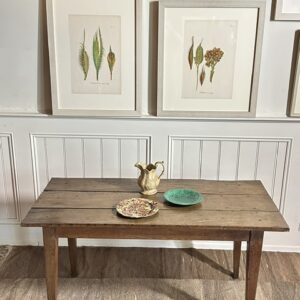
The well patinated three plank top, hand made nailed to the plain narrow skirts. Resting on square tapered legs, one having an unusual lost knot to the top, a nice conversation piece between oak lovers.
The narrow skirt matched with the lower set of four early English oak dining chairs, is a great match, as makes this comfortable seating.
See below the top, the beautifully blended natural oxidisation of the planks and inner skirts, the thickness of the skirts and the huge knot missing from the grain flow of one.
These unique characteristics are generally never seen, not even by most dealers, as it’s a restorer that gets to examine every nook and cranny, having the immense pleasure of discovery!
I say once again, you’ll never find this in perfect, polished town pieces, from any period.
This is why I adore English and European country furniture.
Perfect for creating a stylish kitchen/dining in a smallish space.
This post also featuring a set of four early 18th century English oak dining chairs. I’ll create another post for them.
Enjoyed my linguini bolognaise from @mariaspasta while photographing today.
Also reading up on 18th century Georgian wine tables, seeing a few similarities to many I’ve sold over the decades.
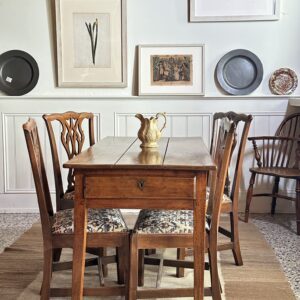
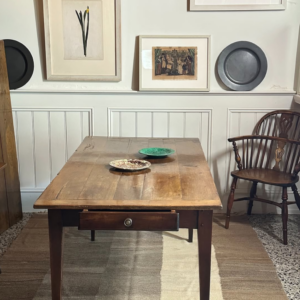
The well patinated faded three plank top, above a plain skirt, with chestnut lined cutlery drawer to one end, with the original shield shaped escutcheon, originally had a lock, unusual for a farmhouse table, so may have been made as a desk.
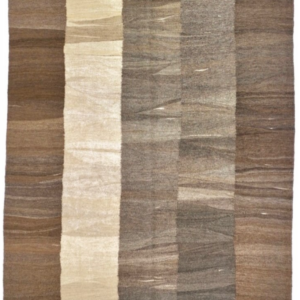
Neutral earthy tones of brown, cream, and taupe with delicate fringed ends.
288 x 184cm
Remarkable the difference a stylish rug can make to a room. The warm tones have beautifully disguised the over busy floor tiles. Changing the entire feel of the display space.
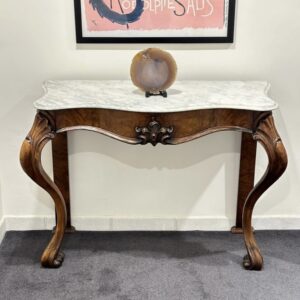
Serpentine shaped moulded marble top, above a matching shaped carved and moulded front skirt, opening to reveal an unexpected narrow drawer.
The stylish lines flowing into acanthus leaf carved knees and over expressed cabriole legs, terminating on a scrolled foot. The beautifully veneered rear plain rectangular legs, on well shaped moulded feet.
Fantastic overall well faded original polished and waxed patina. Could I have raved anymore? What a piece!
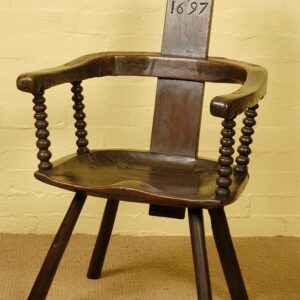
An outstanding and rare late 17th Century Oak and Elm primitive Windsor armchair – Wales. The slanted upright plank back slotted through the single plank bowed arm on four bobbin turned supports joined to the elm saddle seat raised by four tapered out swept legs. Dated 1697 with the initials later gouged out and showing signs of very old repairs including shaped iron braces applied by hand made nails.
Note: This chair is worthy of a museum and will probably never leave my personal collection. I have had the chair photographed in complete detail to display on my website and to be included in a future publication.
Sat in our dining room corner, appearing like a sculpture for many years, now sits in my apartment bedroom ✨
Paying attention to the overall beauty of the rare pieces I’ve sold is one of my more enjoyable pastimes. Finding that unseen knot to the grain of one of the solid oak rear planks, or to the inside of a square tapered leg of a farmhouse table (upcoming post),
Or the small section of sap-wood on the oak dresser base, riddled with long gone borer holes, always to me a great find. These little unseen touches to a piece really excite me.
I do find it a little sad that probably nobody else has ever noticed and missed out on immense pleasure I get from discovering these unique touches.
Yet another wonderful thing of dealing in country furniture, that unlike “town” pieces, a lot more perfect and certainly no place for a huge knot or a fallen knot making the timber imperfect and therefore unusable, so would be cut up to be used as corner blocks. With country or provincial pieces, these imperfections were overlooked, usually as good timber’s were scarce and they used whatever they had.
I’m sort of writing ahead for the upcoming story, but this also relates to this piece.
The 1940s Paris newspapers stuck to the backboards, adds yet another interesting touch to this rare 18th Century French Oak Buffet Deux Corps, of Small Proportions
This is French with strong English Hepplewhite influences. ref to my website, Furniture, French, Buffets.
Such an interesting piece.
Included on my Retirement SALE,
$16,500 reduced to $8,250
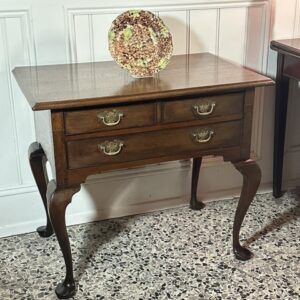
The two plank moulded top, above brass handled, two short and one long drawer, with a slight ogee-shaped skirt, resting on stylish cabriole legs, terminating on a round pad-foot.
H.70cm W.81cm D.50cm
C.1880
18th century English cream wear Thomas Whieldon-type tortoiseshell.
Purchased this table in Chester,
UK over 15 years ago, finally re-glued and wax finished.
UK1899
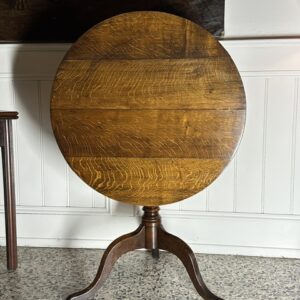
The plain well faded medullary ray grained four plank tilt top above a bold turned column, resting on elegant out swept legs.
Circa 1790
H. 69cm Dia. 79cm
$4,400 reduced to $2,200
Retirement SALE for one final year, all stock reduced from 50 – 60%
I can’t take it with me!
19th century English stoneware jugs and 19th century green majolica plate.
Contemporary brass copy of a classic horse head sculpture on cylindrical stand.
I saw an interesting story on researching the age of timber yesterday on Logan and Angelina’s @ourdollarhouse. Made me think of a few pieces I’ve sold and still have. This is a short story on the age of some rare pieces.
Being a semi retired antique and art dealer, specialising in furniture from that 16th – 20th century, I’ve had many pieces between 500 – 300 years old. Coming to mind,
One outstanding early 16th century Flemish oak credence table from 1520.
A small first half 17th century English oak livery cupboard 1600 – 1640
(both sold to the same Western District family)
an early to mid 17th century English oak refectory table 1600 – 1650, the thick removable cleated top, one single plank! Also graffitied T.A.S. 19/7/13, could’ve been scratched 1713 or 1813, I’d say 1713, due to the soft worn edges.
Truly amazing having this history in my hands. Actually, I recently bought that table back after selling to a friend 25 years ago!
I also sell art from 14th – 20th centuries. I have several large unused pages from a book of hand coloured copper engravings from 1686, actually by Hendrick Draakestein, how’s that for history. So the oak tree used for that 1520 credence table would have been at least 150 years old, so planted at least 1380. The wide plank of ok on the refectory table planted at least 1500.
Looks like we share a deep passion for history and timbers.
I also mentioned the 17th century paper I have from a book of botanical art by Hendrick Draakestein 1686, wonderful to have.