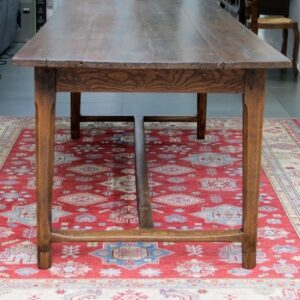
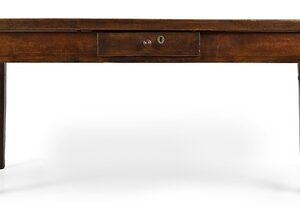
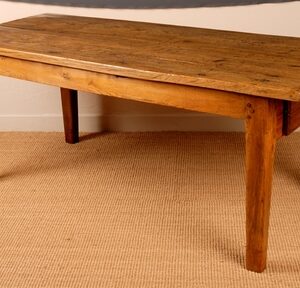
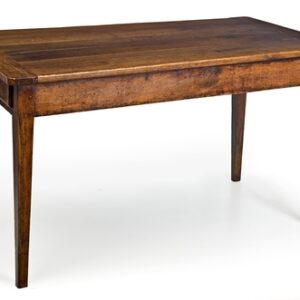
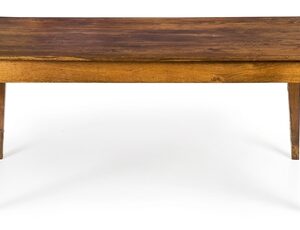
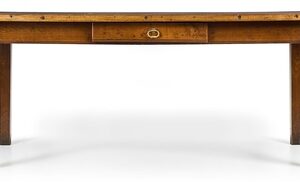
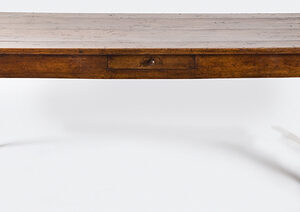
19th Century French elm and deal refectory/farmhouse table. The rectangular deal top above a beautifully grained elm base. The plain frieze housing a wide centre drawer, resting on square tapered camphered legs, joined by a long ‘H’ stretcher.
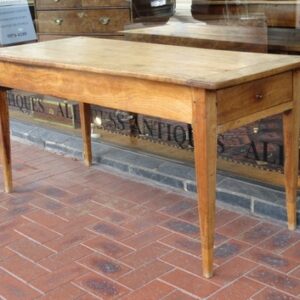
A 19th Century French fruitwood farmhouse/breakfast table of small proportions.
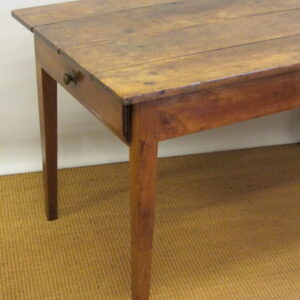
The three plank cleated top above a plain frieze, both ends housing a deep drawer, having the original turned handles. Resting on square tapered legs (Later raised, some years ago) With an overall well faded colour.
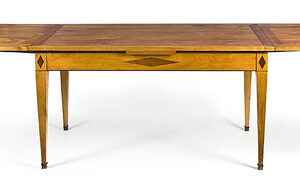
Late 19th – early 20th Century French cherrywood drawer leaf dining table.
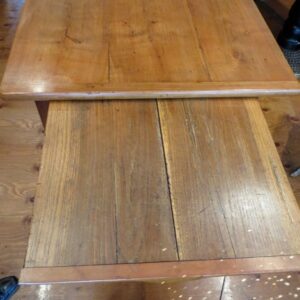
The three plank cleated top having narrow rosewood cross banding and two cleated extending drawer leaves. Above a plain frieze with decorative horizontal and vertical diamond shaped rosewood inlays to the centre and sides, with a matching inlaid edge strip. Resting on square tapered legs terminating on a brass square shaped cup foot.
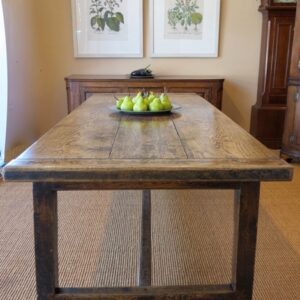
Constructed of generously thick timber, the three plank cleated top slotting into an equally thick straight lined base, joined by a long scratch moulded ‘H’ stretcher.
French 19th Century cherrywood farmhouse table. The four plank cleated top above a plain frieze having two drawers, one to a short side the other the long. Resting on square tapered legs. Good overall faded colours and patination.
C. 1840
H. 2’ 6” – 75.5 cm; W. 6’ 10” – 207 cm D. 2’ 11” – 87.5 cm Inside leg – 186 cm
19th Century French fruitwood and elm farmhouse table.
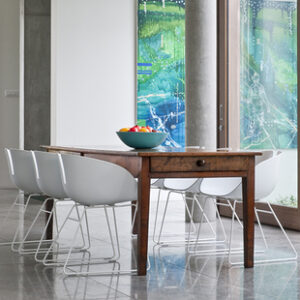
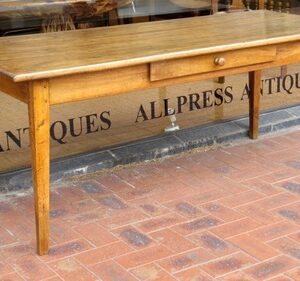
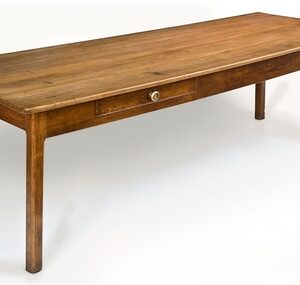
This well proportioned ten seater table having a well patinated four plank fruitwood top above a plain frieze housing a single drawer, resting on square chamfered elm legs.
A small mid 19th Century French provincial oak farmhouse table.
The four plank cleated top above a plain frieze, housing a drawer to one end and a bread slide to the other, both having the original turned handles. (tipped)
First quarter 19th Century French robinia farmhouse table
The top having three planks of robinia and one of chestnut, the apron and square tapered legs from oak. Robinia is originally from the United States, in the 18th Century the tree was exported to Europe where it grew very fast, being a hardwood it was generally used for fences and posts but not so common in furniture.
Note: The two centre planks are both with matching knots.
19th Century French beech and fruitwood farmhouse table.
The beech twin plank bookmatched top having fruitwood cleats above a plain moulded frieze, housing a deep moulded centre drawer, on thick square tapered legs.