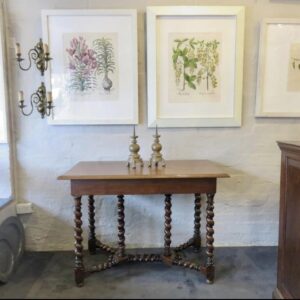
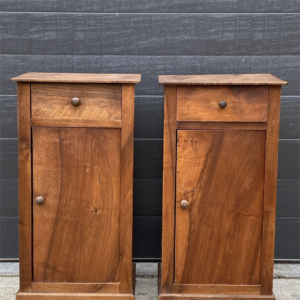
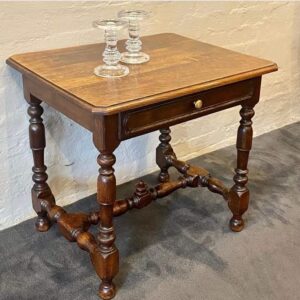
The large single plank quarter sawn walnut top having a zebra grained effect, above a plain frieze, resting on an unusual labyrinth of barley twist legs and angled stretchers.
William and Mary influence in the styling of the base. Early 18th Century style revived in the second half of the 19th Century.
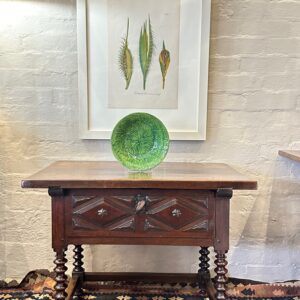
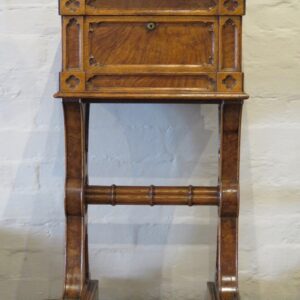
The well patinated thick single plank top, above a deep geometric drawer, having a divided interior, with carved star motifs and bold steel key.
Resting on well turned legs, joined by square stretchers, on matching bun feet.
Note, the top without visible shrinkage, as one plank. Thickness of top 3.5cm
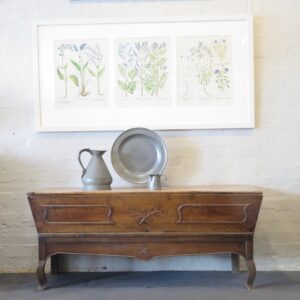
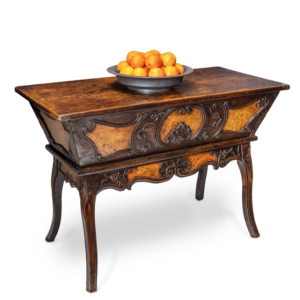
The three plank cleated top (later hinged – originally sliding)
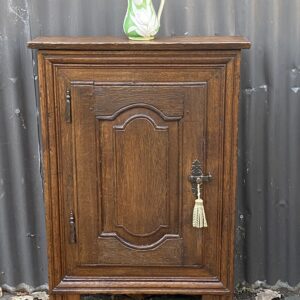
Above canted bin, with original leaf and moulded carving.
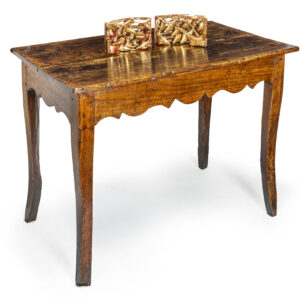
Resting on a shaped, moulded skirt with a carved central star, joined to front cabriole legs.
Still to be re-glued, and re wax finished.
Or left un waxed, as beautifully oxidised over the centuries.
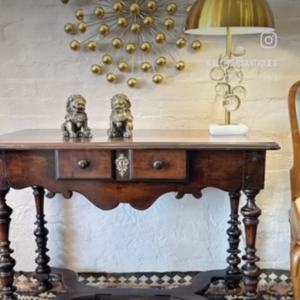
The faded two plank cleated top, above a shaped skirt, the front having a single, double fronted drawer retaining
the original turned handles and central brass escutcheon.
Resting on shaped turned legs with a circular pad foot, joined by a shaped X stretcher.
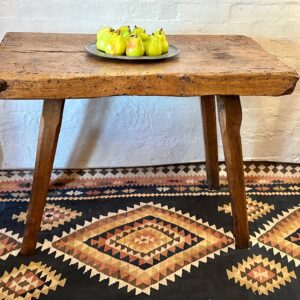
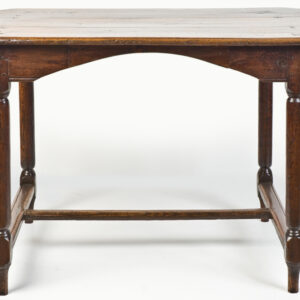
The thick, well worn, patinated single plank sycamore top, retaining the original steel strapping to one end, the free standing pointed corners showing the shrinkage of the timber over the centuries.
Raised on rectangular out-swept ash chamfered legs.
Pewter and pears always suit French provincial and period English oak and country furniture.
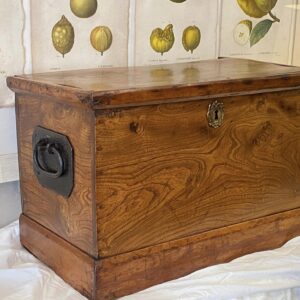
17th century Hendrick Draakestein, Kaida Leaf 1686 and three framed 19th century Wolters Pears 1880, hanging above.
Squeezed in a 19th century French elm trunk for a change.
Such an enjoyable part of my business, creating displays for the showroom and promoting my stock.
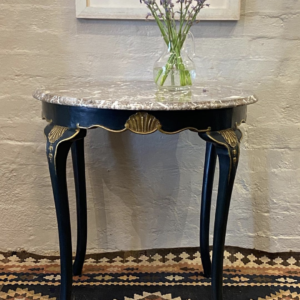
The three plank front cross-banded top, probably taken from a front or top panel of an 18th century coffer or mule chest. In the country they made do with the materials they had on hand. That’s why some pieces are constructed using three – four different timbers. That’s what I love about country furniture, so many individual pieces.
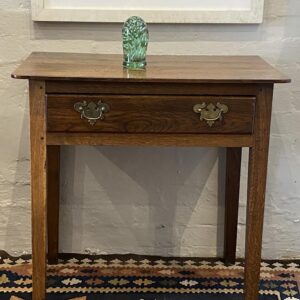
The rectangular top, above a typically second half 19th century deep frieze, housing a think timbered pine lined drawer, with later but appropriate brass shield plate handles, covering the holes where the original turned wooden handles sat.
Resting on a square slight tapered leg.
H.77cm
W.78cm
D.49cm
Above,
Basil Besler
Preudo Struthium
First edition 1613
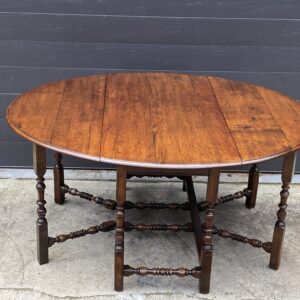
The oval thumb-moulded drop side top, above a beautifully turned double gate-leg base, having mirrored-turned stretchers.
Closed as side/sofa table
H.75cm W.125cm D.59cm
Opened W.153cm
In first stages of restoration was very dark. Cleaned back ready for re-waxing.
Useful as a Side table,
Sofa table, Breakfast table (with one d-end up) or a dining table.
Also as a centre table opened with a vase of flowers.
I look forward to cleaning this table up and re posting…