I’m explaining this table in full detail, to show why I love English country oak, elm, chestnut, ash, fruitwoods, walnut and beech, as no two pieces really are quite the same.
(Unlike town pieces, especially 18th – 19th century mahogany’s, predictably perfect.)
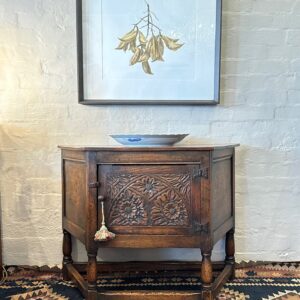
Such an interesting table, with various periods included in the making.
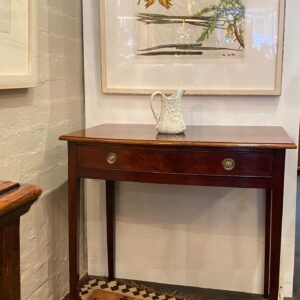
The semi-triangular widening top, above a plain moulded skirt, with panelled sides and a floral carved iron hinged door, opening to reveal storage space.
Resting on turned legs, joined by rectangular upright stretchers.
C.1880
H.76cm W.102 & 58cm D.45cm
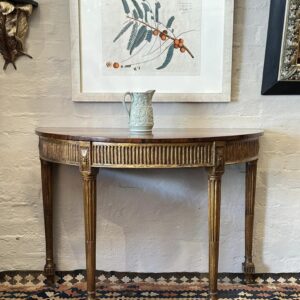
The tapered top makes this table easy to navigate in a small space.
Perfect as a sofa table, hall table, entrance table.
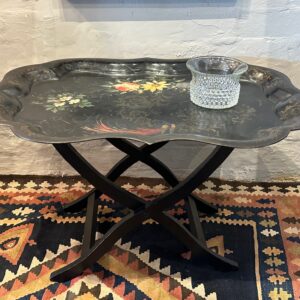
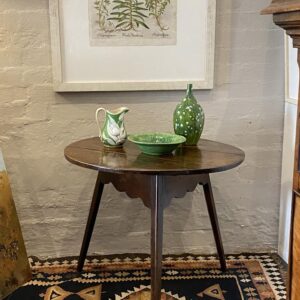
The well preserved floral painted top, having a central still life of fruits and butterflies, with flowers and leaves flowing throughout the centre, and an angel putti.
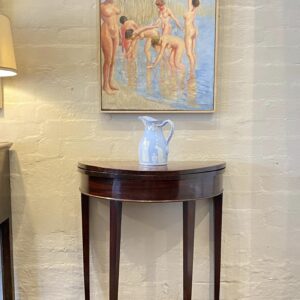
Rosewood cross-banding, with ebony and satinwood stringing.
The gilded fluted skirt, above turned tapered fluted legs.
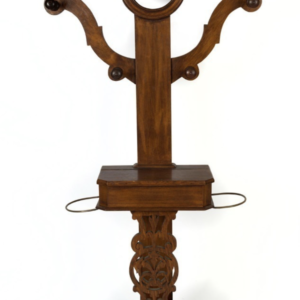
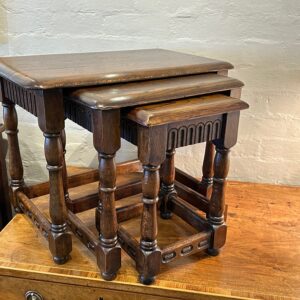
This nest of 1920s oak side tables have been around for many many years.
I purchased them around 15 years ago, my late father Neville stripped the lacquered finish off for me, for some reason he removed all the tops?
So over the years, we found some tops, the bases, moved from store to storeroom, bloody bloody!!
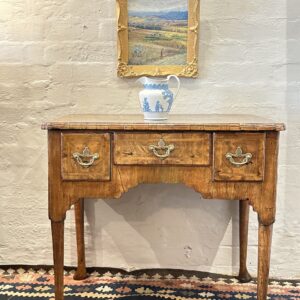
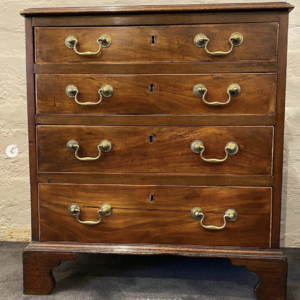
The rectangular quarter panelled feather then cross-banded moulded top, with re entrant corners, above three drawers retaining the original brass handles, with cutaway backplates.
Resting on a straight cabriole leg, terminating on a pad foot.
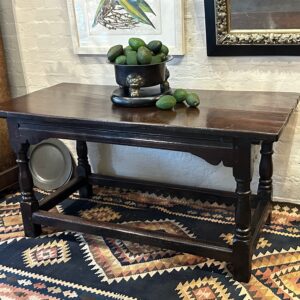
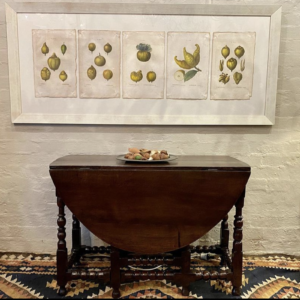
The two plank rectangular central top, with two, two plank drop sides.
Having a fine scratch mould 1cm from plain edge.
One end skirt having a later replaced or rebuilt 19th century drawer, with a brass handle.
The base with graceful cotton-reel legs, joined by bobbin-turned stretchers.
Fantastic overall deep oak colours and patination.