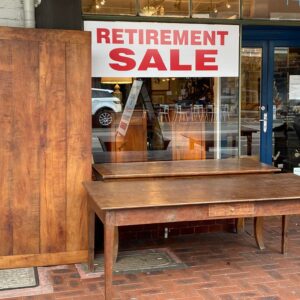
Even though I’m retiring soonish, new stocks still arriving. Everything is discounted even if new arrivals…
Part of new shipment arrived from Europe.
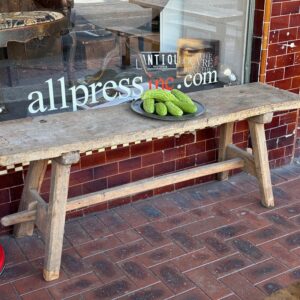
Farmhouse tables
One solid pollard oak top
(Can’t wait to restore it)
One with the original matching trestles and bread slide.
Great patination.
One 2m or each drawer leaf 1m each.
So 2-3 or 4 metre cherry farmhouse table.
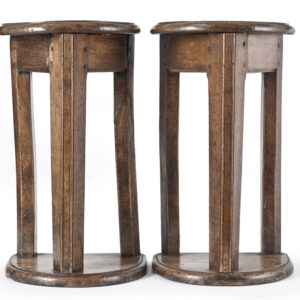
A couple of fantastic dough bin/coffee tables
English oak dresser
A few decorative Italian Murano glass pieces…
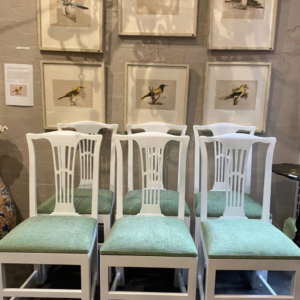
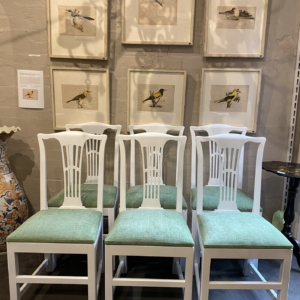
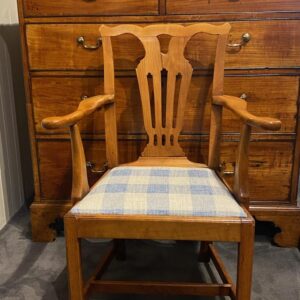
The shaped top rail, above a fret carved tapered centre splat, flanked by shaped tapered uprights.
The freshly upholstered soft mint chenille seats blending beautifully.
Resting on a square leg, joined by stretchers.
This set of chairs were very tired, so we cleaned back the surface and refinished them in a soft white.
Would never dream of doing this to a period chair, however this method of restoration has vastly improved these.
These chairs would look fantastic with a period french fruitwood farmhouse table.
The last set I sold through a decorator in 2009.
These chairs also featured in a home I dressed in Elwood 2009.
To see the story of the Elwood home, search ‘Elwood’ on this website.
Above is a one off set of 19th Regency period watercolours of Indian birds, in Kamataka, Southwest India.
Dated 1828
Also, my favourite 17th Century botanical engraver, Hendrick Draakestein 1686.
I sold these to good customers twenty years ago.
They are now moving and need to sell.
I’m always happy to re sell rare items I’ve handled over the past three decades, as they’re so hard to find.
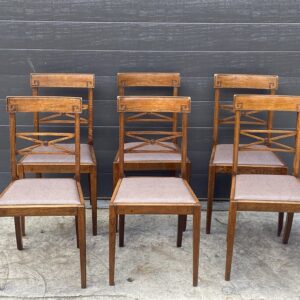
We just finished restoring this fantastic set of 19th century English Country Regency dining chairs.
A customer purchased them not realising that many users ago, someone had drilled holes through every leg and seat rail, tying a coat hanger style metal brace.
Once removed, not easily, they were a complete mess!
Eddie took each chair apart and rebuilt them. We cleaned back, filled the holes, disguised the repairs and refinished them.
Cut back and waxed today and ready to deliver.
I thought I’d share the process with you.
Mixing antiques from different parts of the world can work very well. Not all styles mix well, but 18th and 19th century English and French furniture mixed very well.
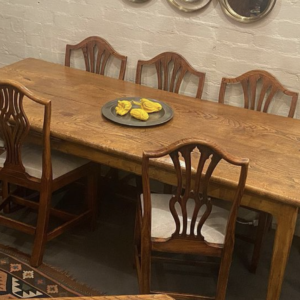
Six from a harlequin set of eight, last quarter 18th century English elm country Hepplewhite dining chairs, with a handsome first quarter 19th century French figured elm, two plank farmhouse table.
Absolutely beautiful. Classic lines with unequalled style, well that’s my opinion.
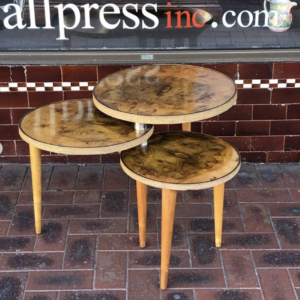
A Rare and Unusual Retro Book-Matched Figured Walnut Central Joined Adjustable Nest of Tables on turned tapered legs. The circular tops having the original coloured formica edging.
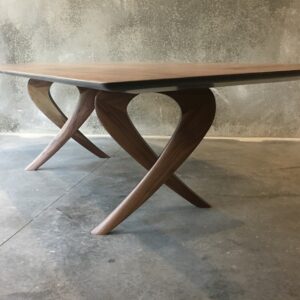
Dealing in antiques for the past 30 years and being in the trade now for 40 years, I have started to add a few contemporary pieces we create for Australian Interior Designers, Architects and Private Customers. Sometimes a customer needs something that has never been made before. The majority of my stock has always been quite unique, so why not provide a modern option of the same quality.
Take a look at mine and Andrews modern creations and consider a unique contemporary piece to mix with your beautiful antiques.
This collection immediately captures your attention with their unquestionable class, elegance, style and clean lines.
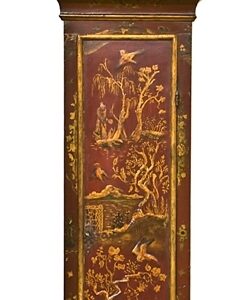
A very rare George I red lacquered month going long-case clock, with Chinese scenes on an oak base with original caddy top in good condition. The brass and silvered engraved and filled dial with early spandrels and signed by listed maker Anthony Harrison of London. This clock has been fully restored and is in great order. Some outstanding features; Very rare month going Outside count-wheel strike Winged columns Listed maker of note By Anthony Harrison of London
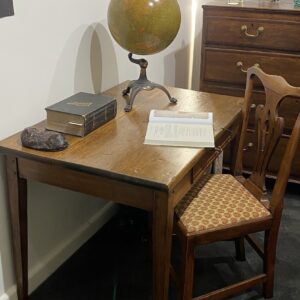
The tick two plank top having several knots and a matched sap wood join between planks above a plain fieze with a single moulded drawer to the front retaining the original lock and escutcheon. Resting on square tapered legs.
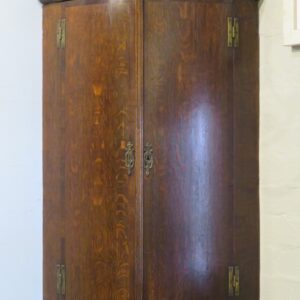
The moulded cornice above two bowed mahogany cross-banded doors, wearing decorative shaped escutcheons, opening to reveal four original bowed narrow shelves and a pair of lower drawers.
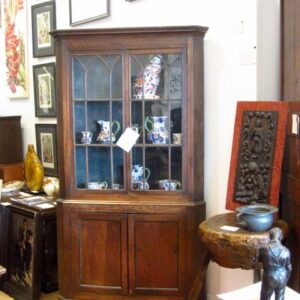
Late 18th Century, George III oak standing corner cupboard, having a shaped cornice above two slight gothic style glass moulded doors, retaining most of the original glass
Note: The horizontal mouldings disguise both shelves, flanked by canted sides.
The base same, except panelled doors concealing a shelved interior, resting on shaped bracket feet.
This piece is yet to be re-glued, cleaned and waxed. The end result will be fantastic.