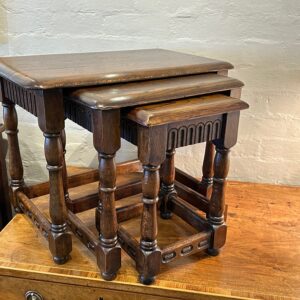
This nest of 1920s oak side tables have been around for many many years.
I purchased them around 15 years ago, my late father Neville stripped the lacquered finish off for me, for some reason he removed all the tops?
So over the years, we found some tops, the bases, moved from store to storeroom, bloody bloody!!
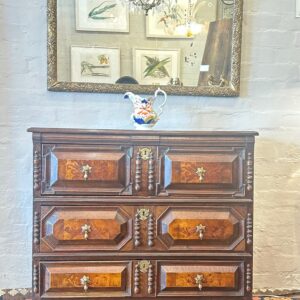
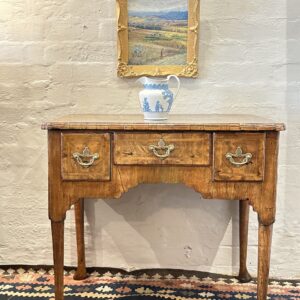
The three plank thin cut moulded top, above a plain gauged stepped mould.
The three long walnut veneered and floral inlaid reverse graduated geometric cushion drawers, having exact period styles of drop handles and decorative applied shaped half turns.
Resting on a cross between a William & Mary ball and a 19th century bun foot.
C.1880
H.88cm
W.96cm
D.53cm
For an original comparison dated 1680, ref to,
Oak Furniture The British Tradition by,
Victor Chinnery.
Figure 2:222 page 195 and various other pages.
I purchased this chest privately some time ago and finally prepared for showroom today.
Classic styles will never date. Fashionable in the last quarter 17th century, through to last quarter 19th century and still today.
Place this stylish chest inside your home of any period or as a feature piece in your modern apartment.
Classic style will always shine
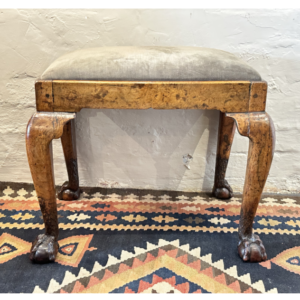
The rectangular quarter panelled feather then cross-banded moulded top, with re entrant corners, above three drawers retaining the original brass handles, with cutaway backplates.
Resting on a straight cabriole leg, terminating on a pad foot.
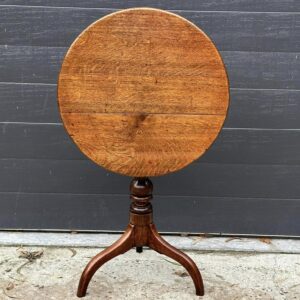
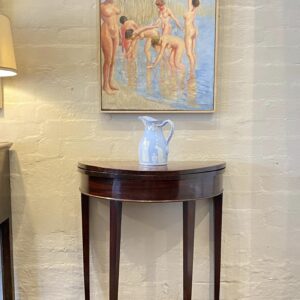
The well faded circular top, on a bold turned support, resting on umbrella shaped down-swept legs (probably plum)
Great overall colour and patination.
H.71cm Dia.61cm
1790 – 1810
One of my favourite aspects about English country furniture, is they used the timbers available in their workshops at the time. If this was a town piece, would all be cut from the same tree and would be mahogany.
How’s this, I imported this table from UK well over a decade ago, along with several pieces we’re cleaning up this week.
Remarkably, the cleaning and re waxing time was about two hours. Well it’s nice finally getting all this nice new/old stock ready for showroom.
Dressers, Chair’s, Chests, Dough bins/petrin’s, sycamore chopping block on oak legs etc..
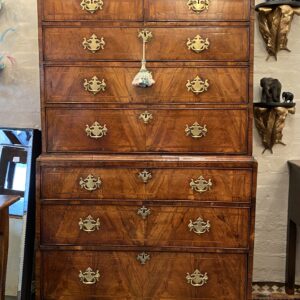
A stunning second half 18th Century English Country walnut and oak chest on chest.
The double moulded cornice above two short then three long book-matched, feather banded, graduated drawers.
The base with three long graduated drawers, with later appropriate brass-work.
Resting on shaped bracket feet.
Good overall colour and patination.
C.1770
H. 170cm W. 108cm D.55cm
The beauty of 18th century English country walnut chests is, they’re quite smaller in dimensions than than their town mahogany cousins.
They can be too dark, large and overbearing. This chest can sit in any room of your home or apartment. Very stylish, classic lines and wonderful figured walnut grain and 250 years of deep wax colouring.
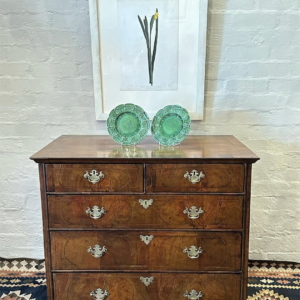
The rectangular cross-banded, segmented veneered cavetto moulded top, above two short and three long graduated drawers, veneers matching top, drawers divided by half round applied moulds, resting on a low bun foot. (later brasses)
Fantastic overall deep waxed patina.
C.1690 H.83cm W.97cm D.59cm
Thornton – Narcissus bursting from its spat, 1808 hanging above.
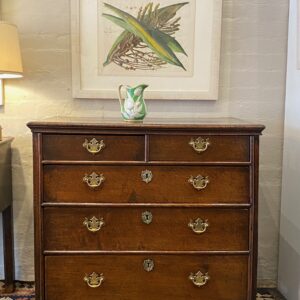
The well patinated two plank moulded top, above two short and three long
graduated fruitwood lined drawers, surrounded by half round mouldings,
double panelled sides, resting on the original turned bun style feet.
Later decorative brass work.
C.1720 H.91cm W.96cm D.53cm
Above,
Hendrick Draakestein
Agati 1686
Hendrick Draakestein Tenga 1686
Trew
Hyacinthvs VIII 1766
Green & white relief moulded stoneware jug
C.1870
Rare 18th century English green & white tulip adorned pottery jug.
C.1770
19th century Masons green floral and gilt decorated jug.
19th century English green glass bubble filled dump.
Decorative Italian Murano clear vase.
Another beautiful piece from my private collection.
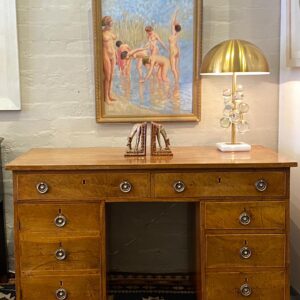
This desk sat in our front living room for 20 years.
It was actually Donnas computer desk.
Perfect for bookwork storage with a shelved faux-drawer cupboard to the left and three graduated drawers to the right.
The top having two wide drawers, all with later stylish brass-work.
The top is very well faded and patinated mahogany with unusual cherry-wood cross banding flanked by thick pear-wood stringing.
For many years before we owned this desk, the previous English owners must have left in a sun filled bay window, to be so well faded overall.
Yet another piece I’d have happily kept for my apartment, if I had the space.
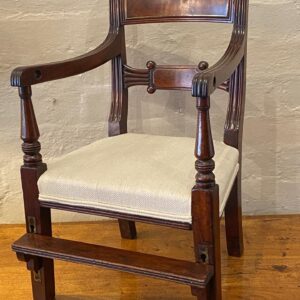
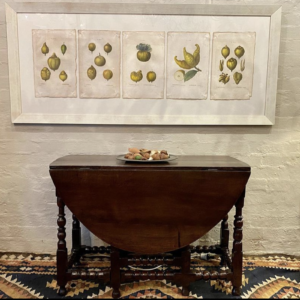
The two plank rectangular central top, with two, two plank drop sides.
Having a fine scratch mould 1cm from plain edge.
One end skirt having a later replaced or rebuilt 19th century drawer, with a brass handle.
The base with graceful cotton-reel legs, joined by bobbin-turned stretchers.
Fantastic overall deep oak colours and patination.
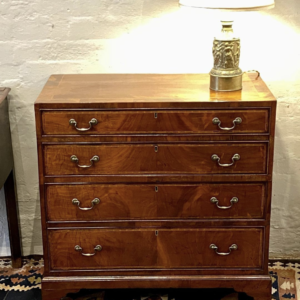
The deep cross-banded top, with a narrow tunbridge-ware inlaid stringing divider.
Above four graduated deniers, with a deeper matching drawers, having beautifully matched flowing veneers,
with a deeper matching tunbridge-ware stringing and narrow cross-banding.
All retaining the original brass swan-neck handles and escutcheons.
Resting on shaped bracket feet.
Notice the clean lines, with no mouldings between the top and base, so stylish, yet fancy bracket feet.
I love these unusual mixing of styles done in the last third of the 19th century.
The drawers are attractive oak lined.
Also, the top overhangs the back boards about one inch to prevent the large fashionable skirting boards leaving deep spaces between the piece and the wall.
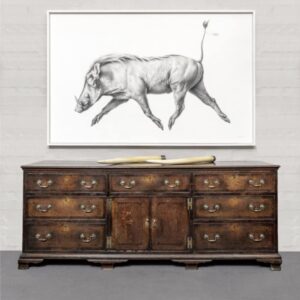
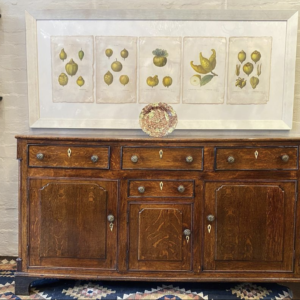
The plain moulded three plank top, with rear plank having a plate groove to display ceramic plates and pewter chargers.
The attractive designed ebonies cock-beaded front displaying four drawers, with a smaller central cupboard, flanked by two larger matching panelled sides.
Resting on shaped bracket feet.
The later art nouveau brass handles suit well.
Good overall colour and patination.
C.1880
H.89cm
W.160cm
D.45cm
Hanging above, five early 19th century framed Redoute hand coloured copper engravings.