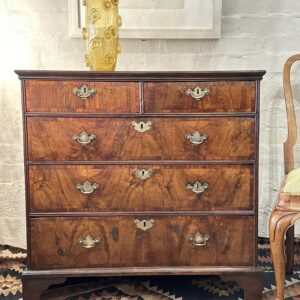
The cross-banded quarter panelled, moulded top, above two short then three long graduated drawers with book-matched veneers and narrow cross-banding, retaining all original brass-work.
The drawers flanked and separated by classic walnut double moulds, resting on plain bracket feet.
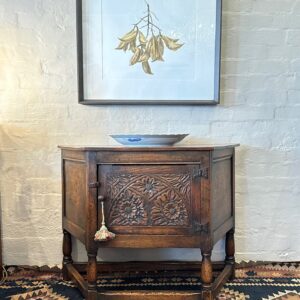
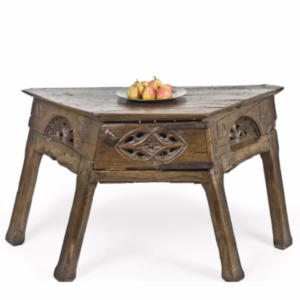
The semi-triangular widening top, above a plain moulded skirt, with panelled sides and a floral carved iron hinged door, opening to reveal storage space.
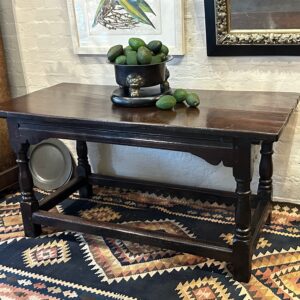
Resting on turned legs, joined by rectangular upright stretchers.
C.1880
H.76cm W.102 & 58cm D.45cm
The tapered top makes this table easy to navigate in a small space.
Perfect as a sofa table, hall table, entrance table.
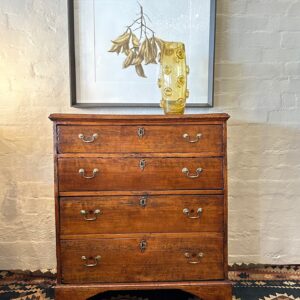
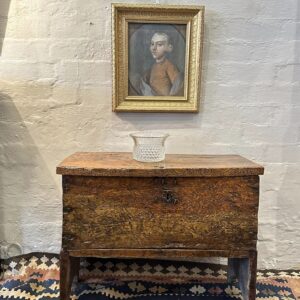
This chest is entirely made from single planks of timber, including the unseen floor (see last photo) which we discovered while lifting through to showroom.
The quarter sawn top and sides showing figurative grain, top with applied shaped mouldings.
The four long graduated drawers with later but appropriate brass-work (also unusual as generally two short then three long drawers).
The well patinated oak cleated, thumb moulded top, above a narrow central drawer and matching lower panelled door, flanked by two banks of three mahogany x-banded graduated drawers,
with brass swan-neck handles. The facing front corners have stylish quarter columns and deep panelled sides. Resting an ogee shaped squatted bracket feet and matching flowing moulded skirt.
Good overall warm coloured patination.
H.91cm
W.192cm
D.59cm
C.1850
This would certainly be the feature piece in your living or dining room.
While sitting there looking fantastic, the many drawers can store a lot of your precious belongings.
Perfect height to use as a serving table or place into a deep hallway as a stylish entry piece.
Hanging above an arrangement of rare 17th to 19th century European hand coloured copper engravings.
See many on my website under, Works of Art – Botanicals.
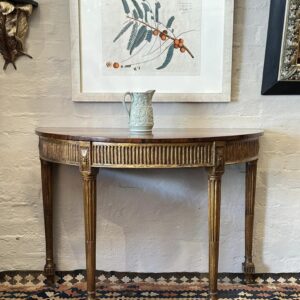
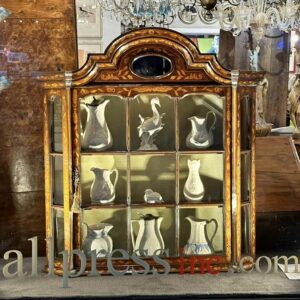
The well preserved floral painted top, having a central still life of fruits and butterflies, with flowers and leaves flowing throughout the centre, and an angel putti.
Rosewood cross-banding, with ebony and satinwood stringing.
The gilded fluted skirt, above turned tapered fluted legs.
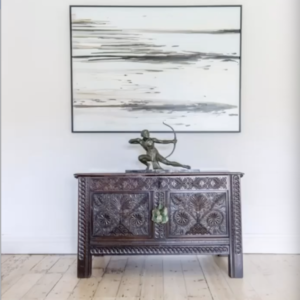
The knuckle hinged top, with an applied carved fruitwood facing mould, above the incised/scratch-carved feeding birds. With traces of the original hand made nails and missing lock plate.
The floor wedged through the end boards, with arches resembling legs.
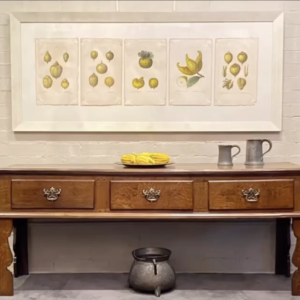
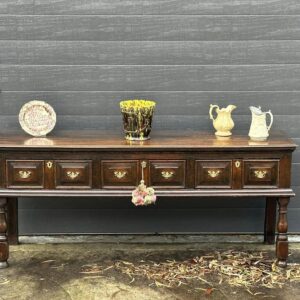
Late 17th century English oak open low dresser,
The well patinated moulded top, above three double cushion moulded drawers,
one constructed using re used earlier timbers, probably from a 16th/17th century oak coffer.
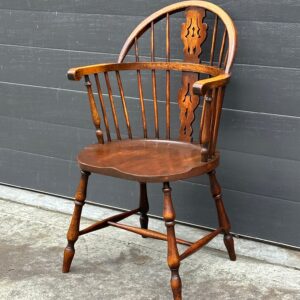
Resting on baluster turned legs.
(Later apropriate brass work)
1680-1700
H.80cm W.190cm D.49cm
I sold this dresser over twenty years ago, to a customer that later became a very close friend. This dresser was placed into his main office and sat in the entrance with a William Robertson hanging above.
I had this photographed and used as a full page advertisement.
I’m trying to locate this Russell Winnell photograph to help re promote the magnificent piece, along with others I purchased back, that were also full page advertisements pre 2000.
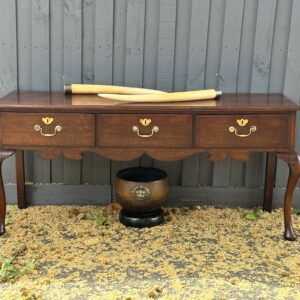
The three plank moulded top, above a plain lower moulded frieze, housing three mitred double cushion drawers, with later, appropriate brass-work.
Resting on baluster turned front legs, with plain rear rectangular legs and plain moulded sides.
Retaining the colourful Italian tassel and key I sold with.
One of the wonderful things about English and French country furniture is they used whatever timbers they had at the time. These drawer linings are an example and often found in 17th-18th century country pieces. Another favourite of mine is how many different timbers are found in the one piece. A French farmhouse table can have three to four different timbers at times. This variance creates the special uniqueness you can only find in country and provincial pieces, as town pieces, as delightful as they are, are more predictably perfect.