
Showing 33–48 of 889 resultsSorted by latest

A most beautiful 19th century French green chinoiserie display cabinet of narrow proportions

A most beautiful 19th century French green chinoiserie display cabinet of narrow proportions

The rectangular moulded top, above two long hinged doors, opening to reveal a cord covered interior, with a small light above each shelf.

The doors having a double throw lock.

With narrow glassed viewing sides, resting on short turned tapered legs.

Classic chinoiserie design overall. Notice the designs flow between joins, incredibly stylish always.

Chinoiserie style started in the early 17th century throughout Europe. The word derives from “chinois” French for Chinese.

European designers imitated the fanciful decorative designs on Chinese silks, art, lacquerware and furnishings.

The style has never fallen from grace. The Queen Anne period in the early 18th century was one of the most chinoiserie desired periods. Over the past three and a half decades in business, I have sold dozens of chinoiserie decorated pieces, from silk and rice paper art, to folding lacquered screens (two over the past year) many hanging bow-shaped hanging corner cupboards, desks, chairs, Chinese export sewing tables (two in storage)

The thing about a beautiful decorative chinoiserie piece is, there is only ever room for the one piece in your room. That one piece sits there either demanding attention or quietly rests saying, look here I am, you can’t beat my style and colouring, so take a seat and enjoy me.

H.159cm

W.116cm

D.27cm

$14,500 reduced to $7,250

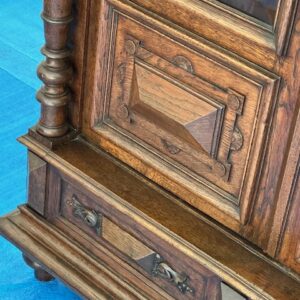
A rare 19th century French oak, pine and walnut table d’entrée.

A rare 19th century French oak, pine and walnut table d’entrée.

The narrow rectangular top, above a central carved rosette with the original steel oval ringed handle, flanked by deep upright carved flutes, then exceptionally turned lunettes, quite a feature.

With a scratch carved hanging Fleur de Lis and turned fluted uprights with a serpentine shaped panelled back-board, featuring a central moulded oak diamond, joined to a serpentine shaped base shelf, on regressed block feet.


H.90 W.67 D.34


Going through my stock I’m clearing at 50% reduction. I found this rare 19th century French table d’entrée – entrance table.


These pieces sell quickly as are a very hard find. Being so stylish and unique, yet small and narrow, so perfect for most entries, especially an apartment.


I sold two similar pieces in my showroom last year. This piece still needs some re gluing and a good clean, a few touch outs and a fresh wax finish. Will look as if never touched and well preserved when I’m finished.


This style of side table originated from a 16th/17th century English oak miniature livery cupboard. I sold a beauty to the western district around 25 years ago. I remember the incredible 19th century farmhouse it’s still residing in, along with some magnificent examples of rare museum quality 17th – 19th century English and European pieces.

I’ll create a post featuring some of my most prized pieces I’ve sold over the decades soon. Such incredible beauty to the eye✨


One of pair of late 17th Century oak side chairs, North West England.

C. 1700


A small last quarter 18th century English pewter charger.

Dated 1797.

Dia: 24cm


19th century English green majolica plate decorated with an embossed grape and vine leaf pattern.


19th century English pewter potty.

Used in displays for over 30 years.

H.11cm

W.29cm


Amber glass bull

A rare find.

A rare find.

Something interesting to think about.

Captain James Cook was 9 years old when this rare publication was printed.

History is so fascinating ✨

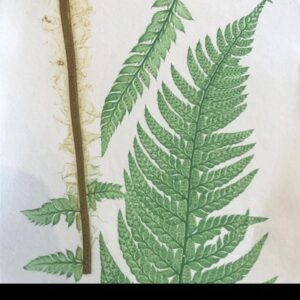
Original hand coloured copper engravings by Elizabeth Blackwell 1737.

‘A Curious Herbal’ was published between 1737 and 1739.

The book contained the first illustrations of many odd-looking, unknown plants from the New World.

Elizabeth Blackwell (nee Blachrie) was among the first women to achieve fame as a botanical illustrator.

She was born in Aberdeen in about 1700, but moved to London after she married.

She undertook an ambitious project to raise money to pay her husband’s debts and release him from debtors’ prison.

Her project was a book called ‘A Curious Herbal’.

She learned that physicians required a reference book which documented the medicinal qualities of plants and herbs.

In order to develop the publication she examined and drew specimens of plants available in the Chelsea Physic Garden.

Sir Hans Sloane provided financial support to publish

‘A Curious Herbal’.

Elizabeth Blackwell is notable for being one of the first botanical artists to personally etch and engrave her own designs.

This saved the expense of hiring a professional engraver.

In total, the enterprise took Blackwell six full years to complete and in the end she was able to release her husband from prison.

One of my favourite women in world history ✨

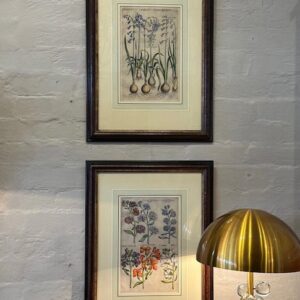
A Recent Sale of Eighteen ‘Elizabeth Blackwells’

A Recent Sale of Eighteen ‘Elizabeth Blackwells’

Yet to be professionally photgraphed, these are iPhone photos.

Elizabeth Blackwell (nee Blachrie) was among the first women to achieve fame as a botanical illustrator. She was born in Aberdeen in about 1700, but moved to London after she married. She undertook an ambitious project to raise money to pay her husband’s debts and release him from debtors’ prison.

Sizing Down Made Easy

Sizing Down Made Easy

With over 35 years as an antique and art dealer, I’ve helped countless people navigate the process of sizing down. From deciding which pieces to keep for a new home, to finding the right ways to part with the rest, whether through trusted dealers, collectors, or auction houses, both nationally and internationally, I’ve guided customers through every step.

Many of my clients own rare, lifelong collections, often built over decades and sometimes passed down through generations. In these cases, professional and knowledgeable advice is essential, especially when dividing assets between siblings, or when aiming to achieve the best possible result from a sale. Interestingly, the most desired pieces are not always the most valuable, and there can be many welcome surprises along the way.

I also assist with the logistics of moving treasured furniture and artwork, whether across suburbs, between cities, or even overseas. Over the years, I’ve built strong relationships with excellent transport providers, and I always recommend owner-drivers and small family-run businesses rather than large corporations. They don’t only give far better personal, respectful service, they are usually far less costly.

As a restorer, I’ve personally worked on many thousands of damaged pieces since I first entered the trade as a child in the late 1970s, often the result of careless or inexperienced carriers. Whenever moving home, apartment, or office, my advice is simple, ask a reputable antique dealer who the most trusted professional carriers are. I couldn’t state that any more strongly.

At times, I also restore dining tables and other significant pieces before a move, ensuring they arrive at their new home in perfect condition, ready to become the centre of attention once again.

By handling these complexities, I’ve removed much of the stress from the process for so many families, leaving them relieved, happy, and grateful.

That said, when it came time for me to downsize, from a large Edwardian family home to a 110 square metre apartment, I found myself facing an enormous challenge. Deciding what to keep and what to let go was no easy task, especially as a passionate and highly selective collector. After spending 20 years perfecting our family home, the idea of parting with pieces felt daunting. (For a glimpse, see “Selling My Home” under Media on my website.)

To my frustration, the buyers of my home didn’t purchase a single item, not because I was seeking sales, but because everything suited the space so perfectly. Even pieces I hadn’t intended to sell had to be reconsidered when dressing the apartment.

Being particular about my surroundings, I’ve carefully curated my apartment over the past six years, replacing anything that didn’t feel quite right. Now, it’s finally complete. My collection spans centuries, from an Otto van Veen (1615), to a Hendrick Draakestein botanical engraving (1686), through to contemporary Australian works by Mali Moir, Lydia Ciconte, Lucinda Chambers, and Martin Tighe.

With such beauty around me, I could happily stay in my space for days on end, but I do venture out, often walking down to Acland Street for a great coffee and a little people-watching, there’s never a dull moment.

After closing my showroom in June 2025, I moved all remaining stock into my warehouse and workshop in Fitzroy North. All visible on my website allpressinc.com and still reduced by 50%. I’m now free to travel around Australia, primarily to advise on sizing down, but also to help clients refine and perfect ongoing collections.

Sizing down doesn’t have to be overwhelming, stressful, or expensive. Choose your pieces thoughtfully, after all, they’ll likely be with you for the rest of your life. Make your space beautiful.

I’m always happy to offer advice on carriers, storage options, restorers, dealers, auctioneers and trusted real estate agents. Helping people create happier homes has been one of the most rewarding parts of my working life.

In early 2023, Russell Winnell photographed my apartment, and I wrote this story around the same time. I’ve held off sharing it with magazines until now, as I’ve continued refining everything, improving displays, changing plants in my beautiful French fruitwood jardinier, replacing furniture, including the chest in my bedroom, and continually changing the display shelving in my living room.

I’ve also been selling directly from my apartment, everything from farmhouse tables and dining chairs, to side chairs, dressers, smaller decorative pieces, and a great deal of art.

Soon, I’ll have Russell back for final photographs, and then this story will finally go to print.

Jamie Allpress
Allpress Creations, 2023–26

Picasso Rare publication by  Cercle d’ Art, Paris 1961

Picasso Rare publication by Cercle d’ Art, Paris 1961

I recently contacted my friend and European art supplier and have purchased his latest find of Picasso’s. Unframed limited edition lithographs Printed in France 1961 73 cm x 58 cm Remaining at half my retail price, as all of my art and furniture since closing June 2025. I have a handful remaining from my previous shipment some years ago. The first five group shots are coming soon… Message me for availability. Note: a few are double sided, but same price.

Thinning out my personal collection

Thinning out my personal collection

Thinning out my own personal collection or for better word “collections” talk about having way too much! I don’t regret gathering so many beautiful pieces over the past 58 years, as I age, it’s becoming easier to part with them. So here’s the first group of my own pieces I photographed today. I’ll do a few separate posts describing each item, along with measurements etc… The glass display shelves and entrance are nearly completed, looking forward to stopping replacing items within my apartment. In the meantime, if you would like some info or would like to make me an offer on anything, don’t hesitate to text or call me. Call or text Jamie 0415555998

“A day in the life of an aesthete”

“A day in the life of an aesthete”

I walked through and all around Glebe, Sydney for a day recently. Was incredibly enjoyable, exploring the history, architecture, trees and flora, meeting many interesting people including Jethro and his beautiful bird Rosie (we hit it off immediately) animals pick up loving vibes✨

After an enjoyable lunch and chat with Jethro and Rosie and enjoying the entire community conversing with my new friends, like they were family, I walked to the city end of Glebe Point Road, visiting galleries, a magnificent shop “Mineralism” Gemstones, Fossil’s and cafe garden. Then walked back the other side to Glebe Point, en route I had a wonderful conversation with Mary, she helps at the local flag shop. Such a fascinating woman with a wonderful life story, she saw me photographing a mural on a building, so we got to chatting, 30 minutes later… I loved the Morton Bay Fig Trees when I reached the water, I wandered through the park photographing trees, like an addict! Oh well keeps me happy… Then walking back to the light rail I noticed every homes stairs were tiled, most with the original 19th century tiles, some with moss from the same period! Several updates in the art nouveau period then through to Edwardian, Deco and retro. I could go back again today and enjoy myself same🤩Thought I’d share only a few of the photos from that afternoon.

Mid 20th Century American Made Ebonised and Polished Brass Easel

Mid 20th Century American Made Ebonised and Polished Brass Easel

After many years enjoying this easel in my apartment, I’ve decided to finally sell. However I can’t remember so many that expressed interest, apologies. Photos in my showroom 2018, when first in my pre  renovated apartment then in my entrance the past few years. Has done me well. Note, everything on my un restored apartment photo has since sold, art, farmhouse table and dining chairs, chinoiserie Deco clock, except the 18th century yew-wood table, see on my website. I’ve always used my home, then apartment as showrooms. Attractive lines with soft black tones and softened shine to the brass The easel stands gracefully in the corner with your art placed, complimenting your painting, not competing. Placed today is a rare foggy Buckmaster with hints of green on the grasses’ edge H.170cm W.65cm D.56cm AA2047

SOLD - 18th century English oak tilt top wine table.

SOLD – 18th century English oak tilt top wine table.

The well patinated circular top, above a well turned central support column, joined to refined out swept cabriole legs, terminating on a stylish pad-foot. Beautifully worn and well patinated. Other than a later replaced catch and a type of stain applied behind, revealing the untouched elm block. H.68cm W.76cm


19th century English green majolica plate decorated with an embossed grape and vine leaf pattern. 

19th century English green majolica plate decorated with an embossed grape and vine leaf pattern. 

19th century English green majolica plate decorated with an embossed grape and vine leaf pattern. Earthenware pottery with a clear lead glaze. Having an embossed or moulded relief pattern of grape clusters and leaves. Majolica of this style was produced during the Victorian era (1837-1900). Mostly made in made in England and France, including Europe and the US, with many pieces being unmarked. Perfect for the Christmas display. Dia: 23cm I have sold many hundreds of this style of Majolica over the years. Search my website and all will show..

Set of 10 19th century French pewter dessert spoons.

Set of 10 19th century French pewter dessert spoons.

The French always add their little touch of unique shape and style to anything they made. Even something as simple as a spoon has its own personal style. I love mixing pewter with green majolica, something I’ve done from when I first opened showroom in 1990. If searching through English Dressers in ‘archives’, you’ll see several examples. This set of ten I found in my storeroom recently, I remember buying them from another dealer long ago and never used in my displays, not unusual!!! Anyway, they’re for sale now and half price. They’re now in my warehouse in Fitzroy North. 20cm – 8”

A few pieces from my private collection, reduced to under 50% of their value.

A few pieces from my private collection, reduced to under 50% of their value.

Over the past few years since selling our family home and sizing down to an apartment, I’ve sold much of my private collection. Some I sold long before I moved, and since I moved, that’s progression and continually upgrading my surroundings. These are a few pieces I’ve reduced to under 50% of their value. Now in my warehouse and only a small display area for private viewings, I’ve made the decision to let a lot go, even the rest of my private collection Before I moved shop in June, I even sold my complete Draakestein collection, ten in total went back to the UK, as much of my stock has over the decades, as dealing in rare items there’s always an international demand. Note: the surrounding pieces and art in my home and showroom have all sold, even the ceramics!! The very long French buffet below the Atamja painting, the farmhouse table, harlequin set of country chippendale chairs and pair of bog-oak side chairs all sold within weeks of placing onto the market. Also the Besler 1613 and olive wood wine table in bedroom. An exciting enamelled mixed media on canvas – 2012. By Ngurah Atamja 200 cm x 300 Late 18th Century French chestnut and oak armoire 1780 – 1800 H: 7’ 4” – 223 cm W: 4’ 10” – 147 cm D: 1’ 9” – 54 cm A rare George III solid yew-wood pembroke table – H: 3’ 4” – 102 cm W: 6’ 11” – 211 cm D: 2’ – 61 cm Last quarter 19th Century French serpentine rosewood sideboard. H: 3’ 4” – 102 cm W: 6’ 11” – 211 cm D: 2’ – 61 cm 19th Century French Burr Elm open shelf bookcase. Fantastic overall colour and patination. C.1840 H.226cm W.146cm D.56cm

An exceptional late 19th Century Chinese export hand carved four panelled chinoiserie black laquered folding screen.

An exceptional late 19th Century Chinese export hand carved four panelled chinoiserie black laquered folding screen.

Happily selling this screen on consignment for a customer I’ve worked with over the past few years. So No GST! Beautifully carved precious stones, including Jade, Ivory, and marble. H. 183cm W. 164cm The right screen on a wall can look better than a lot of terribly expensive contemporary art. Far more unique and individual. Would look amazing hanging spotlighted, take a look on my website, type “Chinese screen” to see the last four panel screen I sold, posted under media, looks outstanding when hung well. I have a professional picture hanger to recommend if you need one.