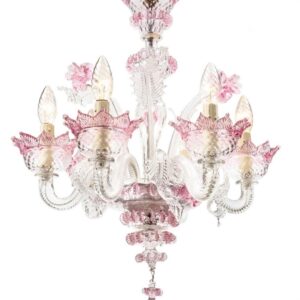
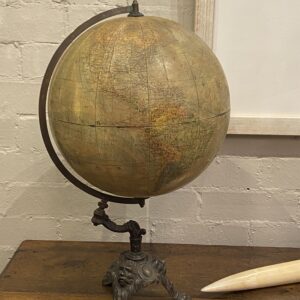
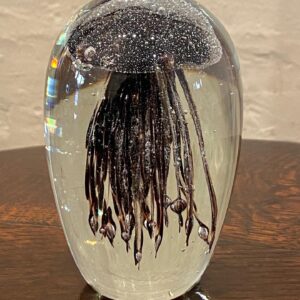
H:60cm with chain and cup 1m
Dia: 50cm
Note: can be raised or lowered to suit..
Surprisingly, the majority of chandeliers I import, still retain the original French globes. Once restored and placed into my showroom or customers home, the majority of globes are still working. Remarkable!
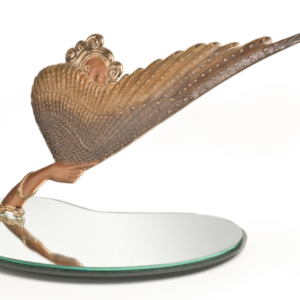
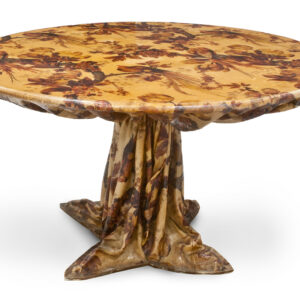
Below the circular top reveals the falling fabric continuing on to form the base.
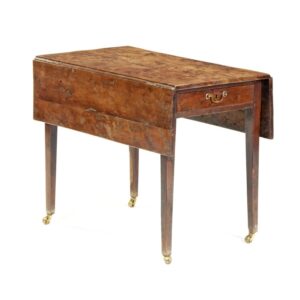
Provenance: The table was selected by notable decorator Colin Bowman when both Madame Verna and he travelled to America for the furnishing of Verbu Lodge in early 1982.
Taking apart, removing old glues, packing the interior for stability, re-glueing and holding glues together.
Then watercoloring the damages out.
Wonderful outcome.
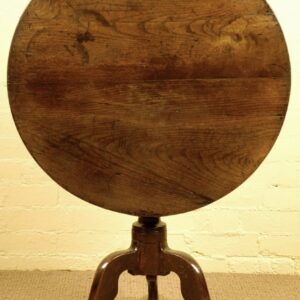
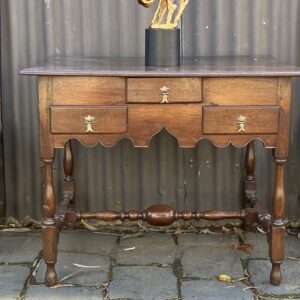
I’ve enjoyed having this beautiful 18th century English yew-wood side table in my apartment for the past few years.
Being a dealer and having such special pieces, I have the enjoyment of living with, then selling once replacing.
I’ll truly miss this table, however living in an apartment forces one to cull!
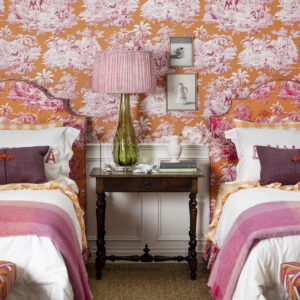
This twin bedroom design was inspired by a wilful little girl and her excitable younger sister.
A pleasant mid 19th century French fruitwood and oak side table.
The well patinated three plank moulded pear wood top, above an oak base.
The long single drawer retaining the original steel drop handle, resting on fine turned legs, joined by a matching turned ‘H’ stretcher, with a turned fruitwood central finial.
But I’m retiring in my own time.
I’m in no hurry, so probably about one year or so, as I have so much stock stored away to sell…
Reasons for retiring:
1. Premier and his $@&+% mates👎🏽.
Was going to retire a little later, he’s pushed things forward.
2. 31 years in business and 44 years in the trade!
It’s time to change and have a second life.
Most probably in Europe for two thirds year and Melbourne the rest.
So long as what’s his face is gone!
3. European history and architecture.
I can’t wait to see every inch of every country. Holidays have never been long enough.
4. Kids out of school, No more private school fees!! and I’m single! Yay!!!
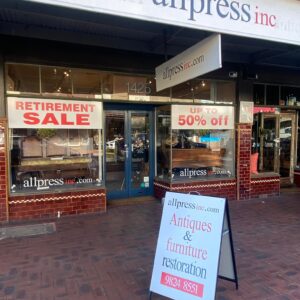
So this is not a RUG SHOP closing down SALE, it’s a genuine retirement sale.
Pieces discounted between 20% – 50%
My stock is selling very quickly, so if you like something, come in.
I may keep this shop, even when overseas? There’s many other things I can do here…
Perfect location for anything unique and interesting.
I have many ideas…
Have a good look through my website and regular Instagram posts.