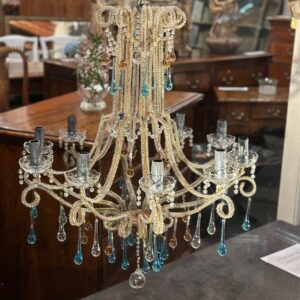
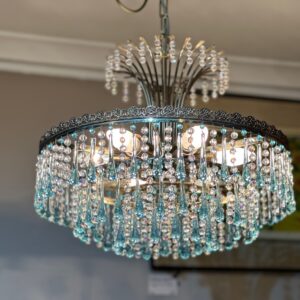
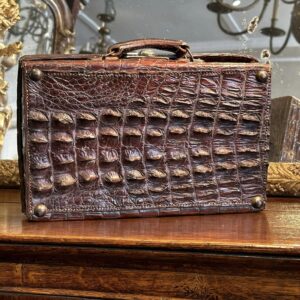
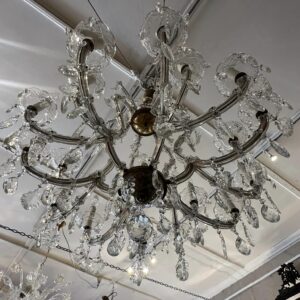
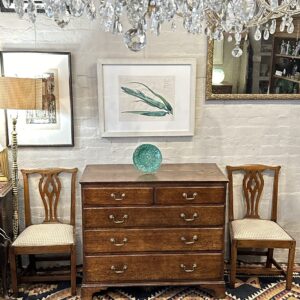
Showing some of the many wonderful unique decorative pieces I’ve sold before year end and over the past two weeks of re opening, mainly due to my 50% off closing sale.
Several hundred pieces of furniture, art, lighting, ceramics and decorative items still in my showroom and storage. Best to look at my website to see more,
allpressinc.com
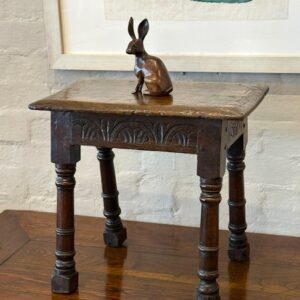
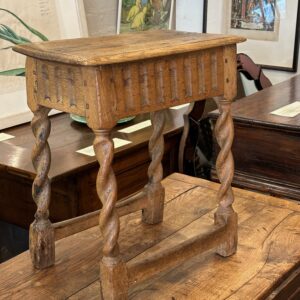
From usage over the past 150 years the finish has naturally worn off, leaving a beautifully faded raw patina.
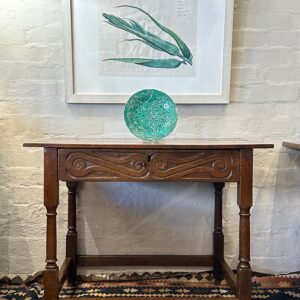
The rectangular single plank moulded seat having attractive figured oak grain.
Above deep upright gouge carved skirts, with a pretty fine scratch-carved flower over all.
Raised on beautifully carved fine lined Jacobean style barley-twist legs.
Joined by the two remaining long stretchers.
C.1870
I have hundreds of pieces to clear.
Over 100 pieces of art, rare 17th to 20th century pieces of furniture.
Ceramics, glassware including contemporary, mirrors etc…
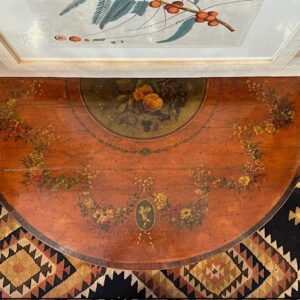
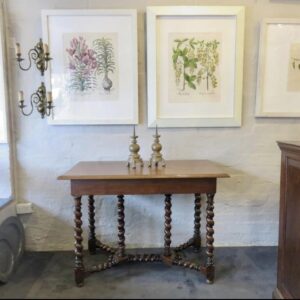
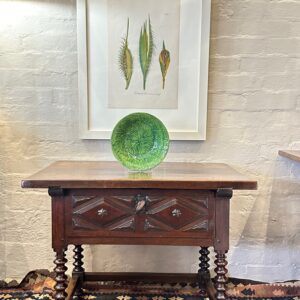
The large single plank quarter sawn walnut top having a zebra grained effect, above a plain frieze, resting on an unusual labyrinth of barley twist legs and angled stretchers.
William and Mary influence in the styling of the base. Early 18th Century style revived in the second half of the 19th Century.
I’m explaining this table in full detail, to show why I love English country oak, elm, chestnut, ash, fruitwoods, walnut and beech, as no two pieces really are quite the same.
(Unlike town pieces, especially 18th – 19th century mahogany’s, predictably perfect.)
Such an interesting table, with various periods included in the making.
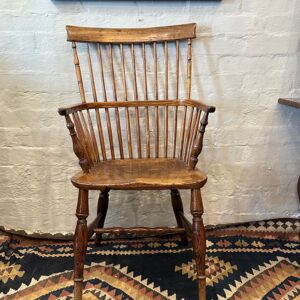
A customer brought in this exceptional copy of a mid 19th century English comb-back ash and elm Windsor armchair yesterday, such a good late 20th century copy, in every way.
I don’t sell copies, but remembered another customer was wanting an original, I called and showed her this one. SOLD!
Certainly priced accordingly, but two very happy customers.
A rare George III English oak dish-top lamp table.
C.1770
H.69cm Dia.41.5cm
Hanging above, “Caunga”
Hand painted copper engraving,
by Hendrik Draakestein.
The first complete flora from the East Indies.
Amsterdam 1686
The well patinated thick single plank top, above a deep geometric drawer, having a divided interior, with carved star motifs and bold steel key.
Resting on well turned legs, joined by square stretchers, on matching bun feet.
Note, the top without visible shrinkage, as one plank. Thickness of top 3.5cm
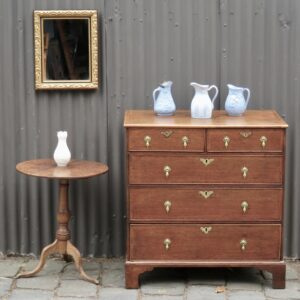
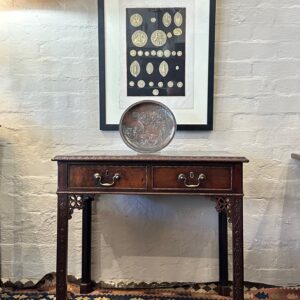
The well patinated two plank cleat-moulded top, above two short, then three long graduated narrow moulded drawers, having brass swan-neck handles.
Resting on classic shaped bracket feet.
Great overall faded patina.
C.1770