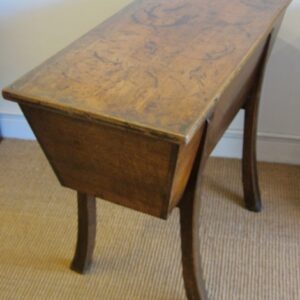
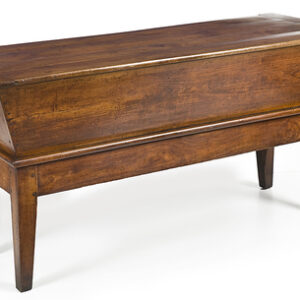
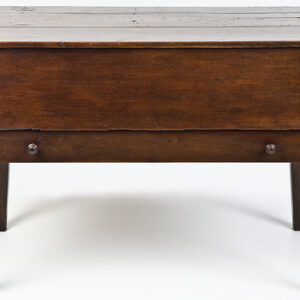
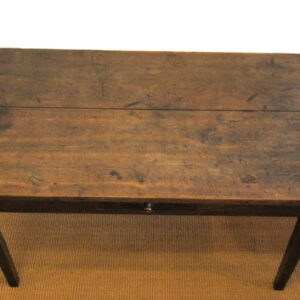
The well patinated four plank cleated hinged top, lifting to reveal a well used cantered side interior, above a plain frieze, resting on square out swept internally chamfered legs.
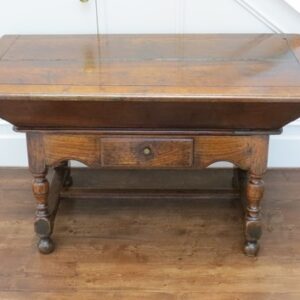
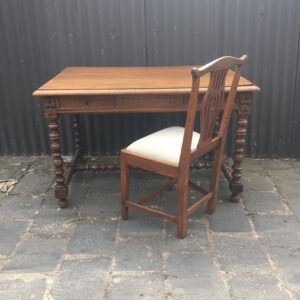
The four plank cleated top above a four plank cantered storage bin, resting on a shaped moulded frieze containing a centre drawer with the original brass pull, raised on four well turned out swept legs on a round bun foot, joined by a moulded ‘H’ stretcher. Good overall colour variation and will wax up well.
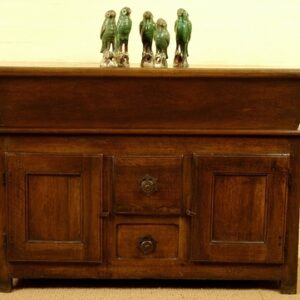
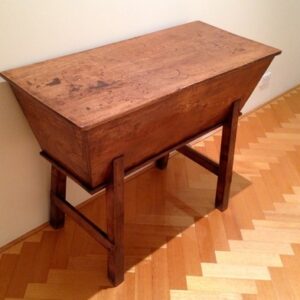
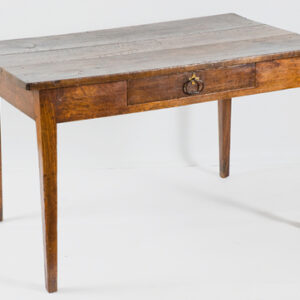
An Unusual 19th Century French Oak Dough Bin. The hinged shaped top following the lines of the lower bold turned tapering legs; embracing a long single drawer, with the original decorative shaped handles.
C. 1840
H: 2’6” – 74.5 cm W: 3’5” – 103.5 cm D: 1’ 9” – 54 cm
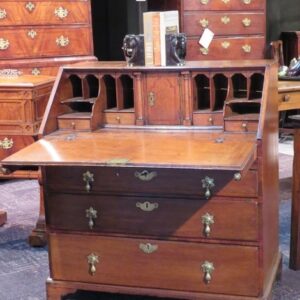
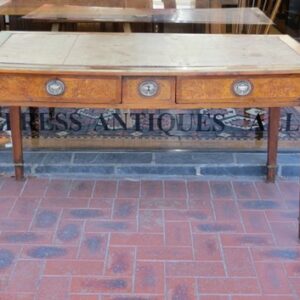
Made in the George II style, in every way. The walnut cross-banded fall front, opening to reveal a fitted interior, of a walnut X-banded central door, flanked by two obvious upright colomn fronted secret drawers, then pigeon holes and small brass handled drawers.
Having a sliding ink well, once opened enabling one to locate the other two very secret hidden drawers. So secret that when I discovered them they seemed to have never been touched!
The carcass having a deep figured walnut top rail and small sized full front support lopers with brass knob handles, above three long graduated drawers, retaining the original brass drop handles and central escutcheons.
The well patinated thick leather insert, within a brass moulded mitred cherrywood top, above a plain frieze, the front housing two cross banded drawers and a central faux drawer, having the original oval urn patterned pressed brass handles and escutcheon.
Resting on square tapered legs, having matching burr elm rectangular inlays to the top and bottoms. Also having a matching brass moulding to the lower leg.
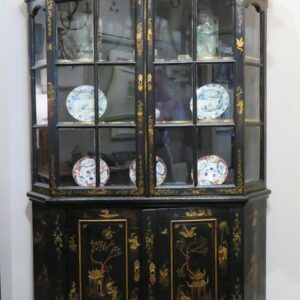
19th Century Dutch Chinoiserie decorated display cabinet/bookcase,
The unusually narrow display cabinet having a serpentie shaped moulded top above original pitted glass paneled doors and angled sides The base having two hinged doors, concealing a long single shelved interior. Great overall colour and patination to the exquisite overall Chinoiseire decoratred finish. Restored in our workshops. C. 1860 H. 200cm W. 129cm D. 34cm
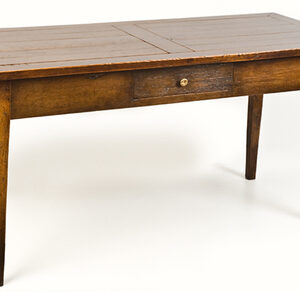
A first half 19th Century French oak and chestnut dining table/desk.
The very well patinated oak four plank top above a plain chestnut frieze housing a chestnut drawer with oak nob, resting on square tapered oak legs (raised to suitable height).
1820 – 1850
H. 2 ‘6″ – 77.5 cm W. 4′ 4″ – 132 cm D. 2’ 6″ – 76 cm
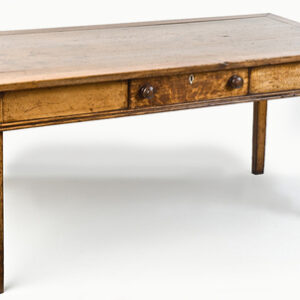
Mid 19th Century continental oak farmhouse table/desk.
The cleated planked top above a double moulded apron housing a centre drawer with original lock and key, and the original turned handles, and diamond shaped bone escutcheon. Resting on rectangular block legs with great overall colour and patination.
Provenance: Belonged to a recently retired Q.C who used it daily for 30 years.