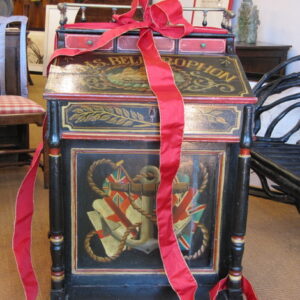
An interesting 19th Century English printed ship’s davenport.
The brass turned finial gallery above a hinged writing slope with ‘H.M.S. Bellerophan’ painted. The front panel having an anchor and English flag, and the left side dated ‘1815 A.D.’, housing three painted drawers. The right side having a crown and the initials ‘G. III R.’, and the rear panel having ‘Royal Navy’. (Restorations)
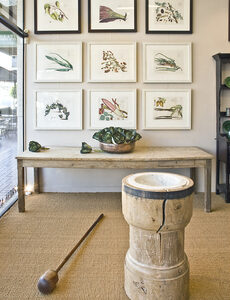
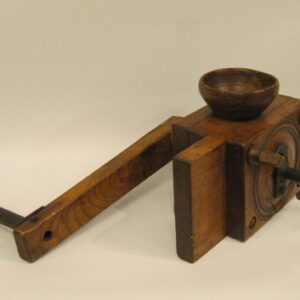
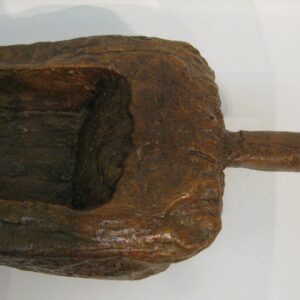
An Outstanding Early 19th Century English standing mortar. The original white marble, well worn mortar inserted to an incredible thick piece of turned elm. (Imagine the lathe) Also having a thick iron band to the top with natural splits and knots overall.
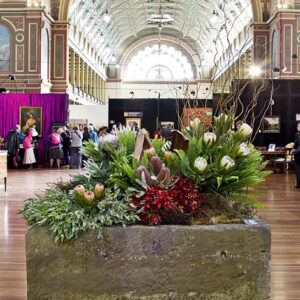
Mid to late 19th Century Australian carved sandstone water trough.
Carved sometime in the 1800’s, it was used as a horse water trough outside the stables of a property called “Mount Morriston” at Ross in the days when there were teams of draught horses. When draught horses were no longer needed it was used as a water trough in the shearing shed paddock up until about 1985 when it was moved into the garden at the homestead outside the front door and used for plants. Then moved to Mt Eliza and used for the same purpose.
A mid 20th Century Italian composition satyr figure.
During the excavation of Pompeii, the lost Italian city, where the original of this statue was excavated identified the actual property – ‘The Satyr Statue’.
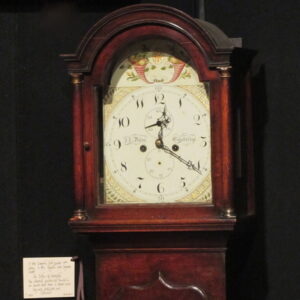
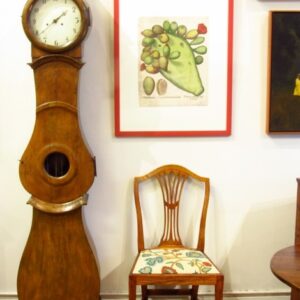
A decorative first quarter 19th Century French Comptoise longcase clock.
The well patinated waisted shaped pine case, with a circular hood with hinged glass door, housing a white enamel painted dial flowing to the waist shaped trunk with a long shaped door having a pendulum looking glass and a bombe shaped base.
Dated 1822 (inside trunk door)
H: 208 cm
W: 50 cm
D: 22 cm
Clock serviced several years ago by Bairnsdale Clocks.